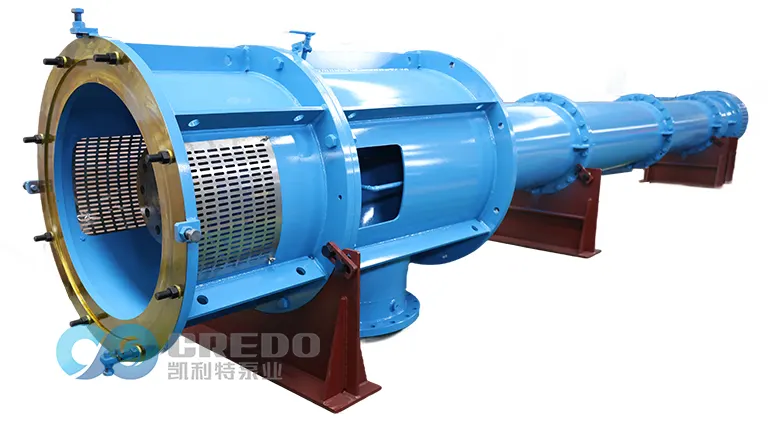
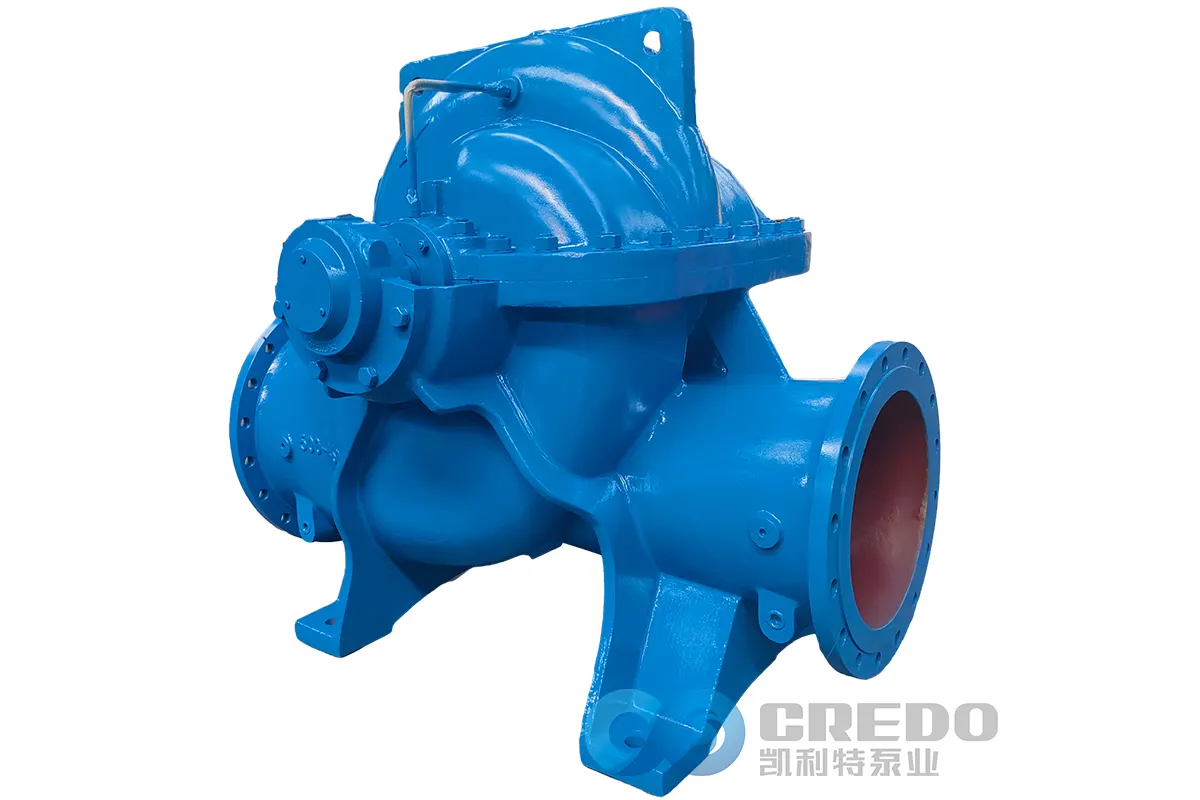
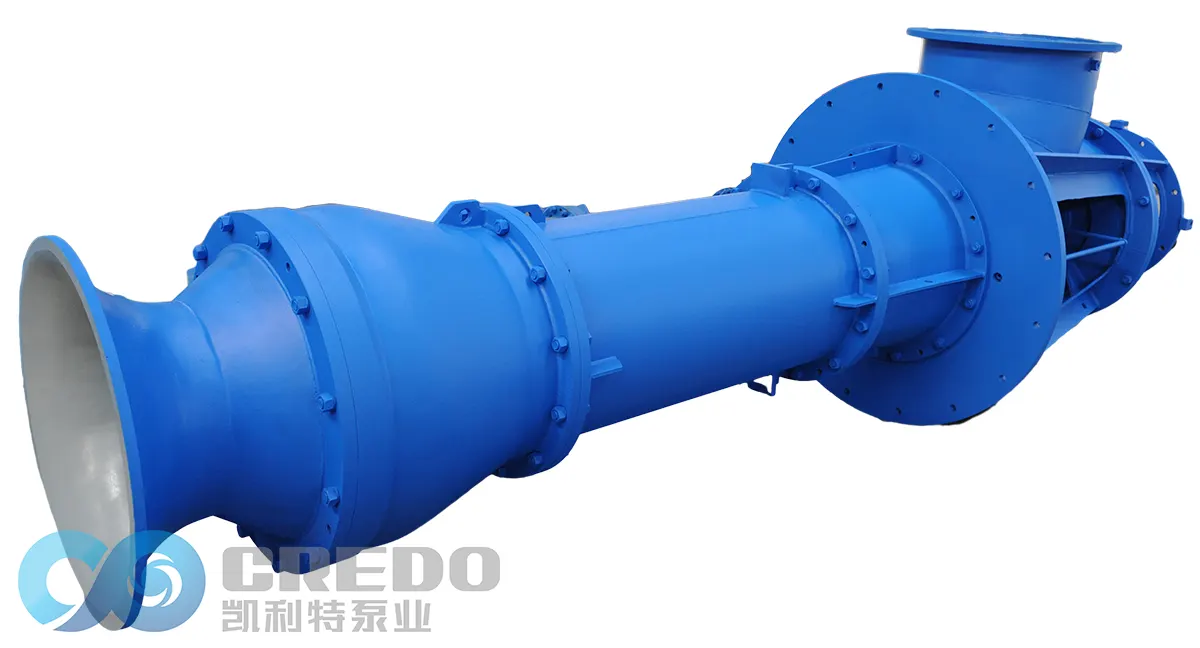
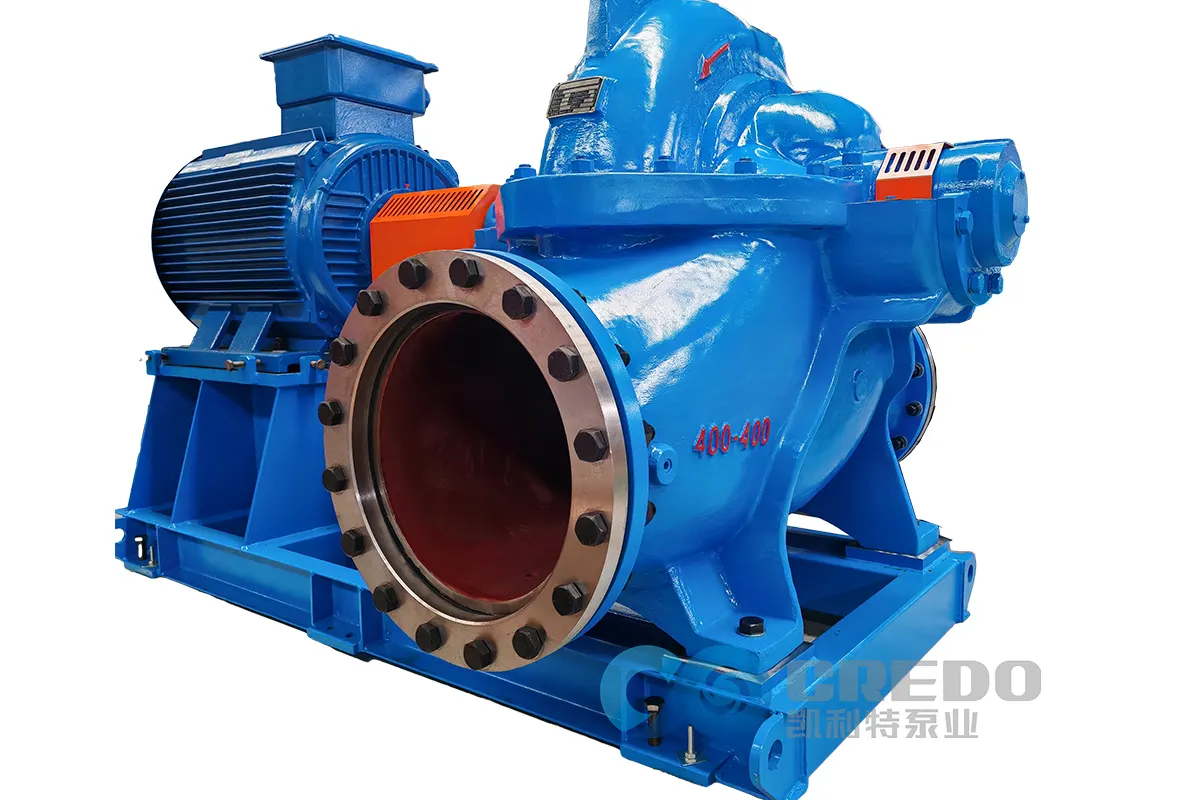
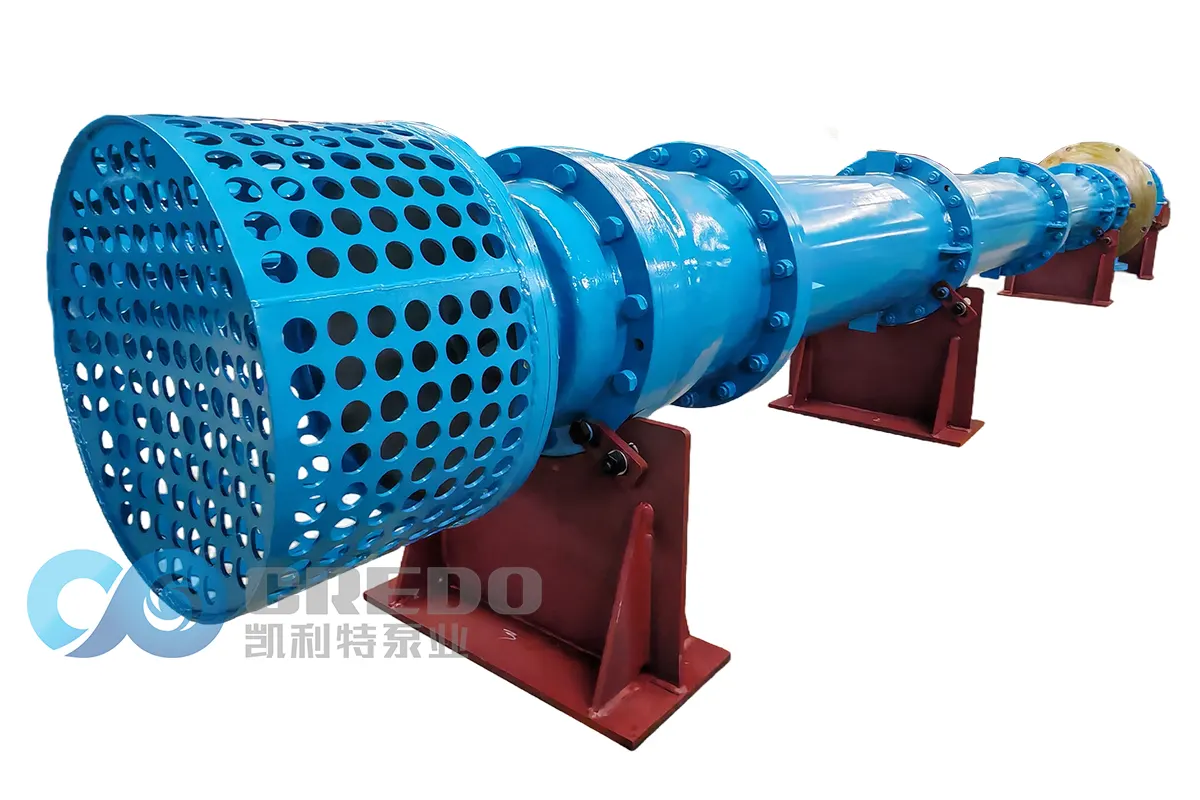
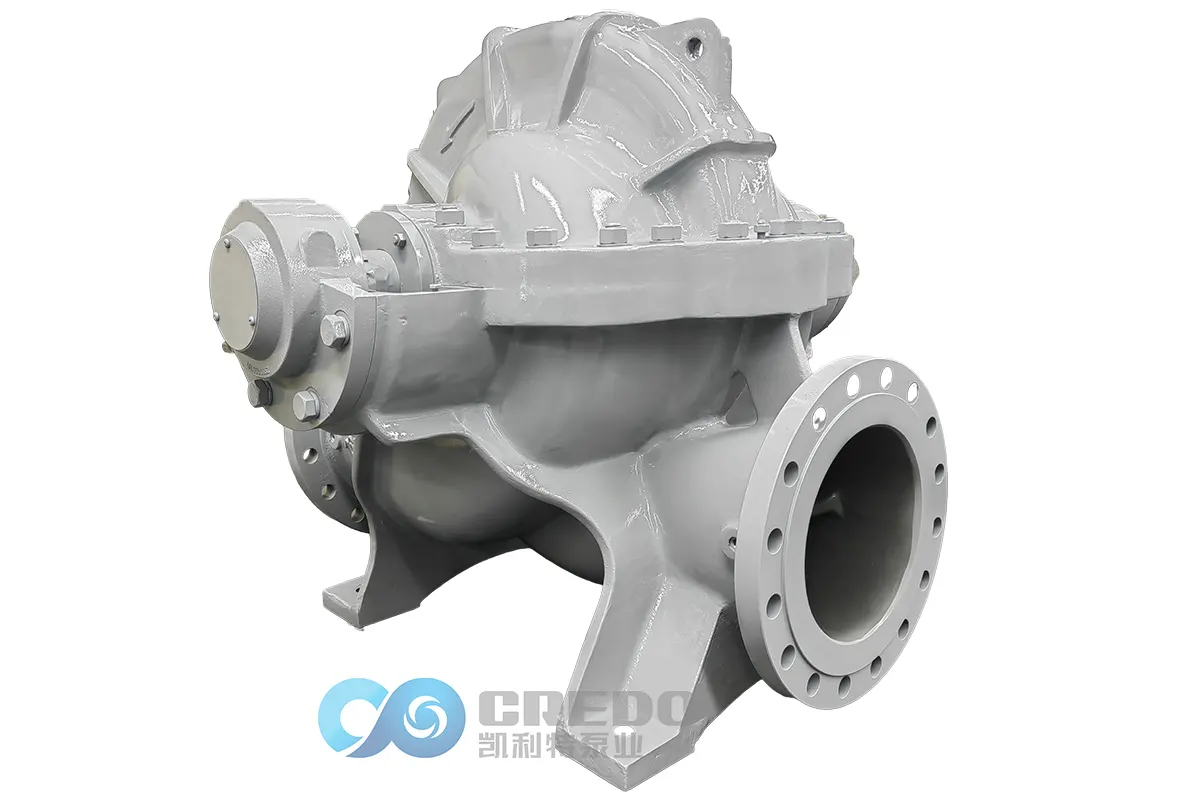
Understanding the Composition, Structure, and Installation Guidelines of a Vertical Turbine Pump
The vertical turbine pump is a highly efficient and reliable pumping solution, specifically engineered for deep well applications and high-lift water transportation. Thanks to its vertical design and multistage configuration, this pump is widely used in municipal water systems, industrial operations, and building services. Its ability to resist corrosion, handle high temperatures, and avoid clogging makes it ideal for both domestic and commercial water supply and drainage.
This article explains the main components and internal structure of a vertical turbine pump, outlines the material options for critical parts, and provides essential installation tips to ensure long-term, stable operation.
Composition and Structure of a Vertical Turbine Pump
| Components | Function |
| Driver (Motor/Engine) | Provides the power to run the pump |
| Discharge Head | Supports the motor and sends water to the discharge pipe |
| Column Pipe | Carries water up to the surface and holds the line shaft |
| Line Shaft | Transfers rotation from the motor down to the impellers |
| Bowl Assembly | Contains the stages that increase water pressure |
| Impeller | Spin the water and push it upward |
| Suction Bell / Strainer | Guides water into the pump and blocks large debris |
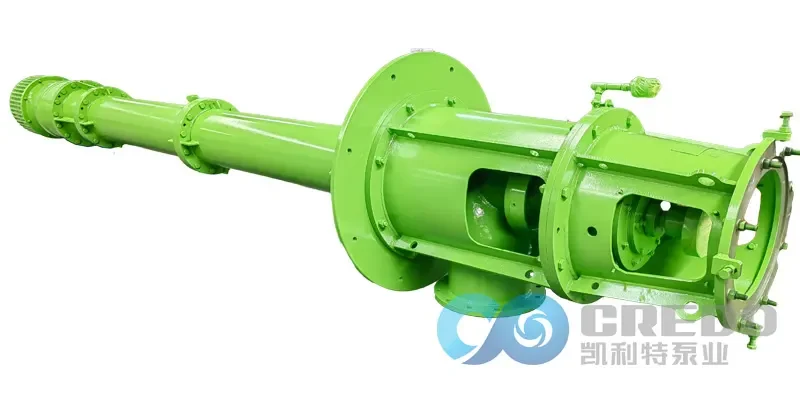
A vertical turbine pump consists of several key components that work together to deliver high efficiency and long service life:
These components are assembled in a modular fashion, making the vertical turbine pump easy to install and maintain. It is especially suited for deep well installations where submerged pumping is required.
Materials of Construction
The selection of materials for vertical turbine pump components depends on the specific working conditions, such as fluid temperature, abrasiveness, and corrosiveness. Common materials include:
| Components | Material |
| Discharge Head | Carbon steel/ S.S / Super Duplex |
| Column Pipe | Carbon steel/ S.S / Super Duplex |
| Line Shaft | Steel/ S.S / Super Duplex |
| Bowl Assembly | Cast Iron / Ductile Iron / Cast Steel / S.S / Super Duplex |
| Impeller | Cast Iron / Cast Steel / Ductile Iron / S.S / Super Duplex |
| Suction Bell / Strainer | Cast Iron / Ductile Iron / Cast Steel / S.S |
These materials ensure high strength, excellent corrosion resistance, and long operational life, even in challenging environments.
Vertical Turbine Pump Performance Parameters
| Parameter | Value |
| Maximum Flow Rate | Up to 10,000 m³/h |
| Maximum Head | Up to 220 meters |
| Power Range | Up to 5,600 kW |
| Operating Temperature | -20°C to 80°C |
This wide performance range makes the vertical turbine pump a versatile solution for numerous industrial and municipal applications.
Installation Instructions for Vertical Turbine Pumps
Proper installation is crucial for achieving the expected performance and durability of a vertical turbine pump. Follow these essential guidelines:
| # | Step | Description / Action | Notes / Purpose |
| 1 | Clean All Components Before Installation | During hoisting and assembly, avoid contact between parts and hard surfaces. | Prevents damage and contamination by sand or debris. |
| 2 | Apply Lubrication to Threads and Joints | Apply a layer of grease or butter on all threaded connections, seams, and joint surfaces. | Facilitates easier installation and protects against corrosion. |
| 3 | Align Shaft Couplings Accurately | Ensure drive shaft ends are in full contact and joint is centered when connecting to coupling. | Prevents misalignment and vibration. |
| 4 | Check Shaft-to-Pipe Concentricity | Verify that pump shaft is concentric with each pipe section installed. | Correct misalignment by replacing shaft or pipe to avoid mechanical stress. |
Conclusion
The vertical turbine pump stands out as a powerful and dependable option for deep well and high-head pumping tasks. Its modular design, corrosion-resistant materials, and stable performance make it ideal for municipal, industrial, and commercial applications. By understanding its internal structure and following best practices for installation, operators can ensure optimal performance, reduced maintenance costs, and extended service life.
For long-term reliability and efficiency, always follow manufacturer guidelines and perform routine inspections after installation.
FAQ – for Vertical Turbine Pump
Learn about the key spare parts commonly used in vertical turbine pumps.
| Vertical Turbine Pump Spare Parts & Qty (2 Years) | ||||||||
| For Packing Seal Pump | ||||||||
| Spare Parts/Qty | Pump Qty (Including Spare Pump) | |||||||
| 1 | 2 | 3 | 4 | 5 | 6 | 8 | ≥10 | |
| Shaft Sleeve(Packing) | 1 | 2 | 3 | 3 | 5 | 5 | 7 | 8 |
| Shaft Sleeve(Middle) | 1 | 2 | 3 | 3 | 5 | 5 | 7 | 8 |
| Shaft Sleeve(Lower) | 1 | 2 | 3 | 3 | 5 | 5 | 7 | 8 |
| Packing | 1 | 2 | 3 | 3 | 5 | 5 | 7 | 8 |
| O Ring | 1 | 2 | 3 | 3 | 5 | 5 | 7 | 8 |
| Wear Ring | 1 | 2 | 3 | 3 | 5 | 5 | 7 | 8 |
| Adapter Coupling | 1 | 2 | 3 | 3 | 5 | 5 | 7 | 8 |
| Guide Bearing | 1 | 2 | 3 | 3 | 5 | 5 | 7 | 8 |
| Bearing | 1 | 2 | 3 | 3 | 5 | 5 | 7 | 8 |
| Impeller Shaft | 1 | 1 | 1 | 2 | 2 | 3 | 4 | 5 |
| Middle Shaft | 1 | 1 | 1 | 2 | 2 | 3 | 4 | 5 |
| Transmission Shaft | 1 | 1 | 1 | 2 | 2 | 3 | 4 | 5 |
| Impeller | 1 | 1 | 1 | 2 | 2 | 3 | 4 | 5 |
| Packing Gland | 1 | 1 | 1 | 2 | 2 | 3 | 4 | 5 |
| For Mechanical Seal Pump | ||||||||
| Spare Parts/Qty | Pump Qty (Including Spare Pump) | |||||||
| 1 | 2 | 3 | 4 | 5 | 6 | 8 | ≥10 | |
| Shaft Sleeve(Mechanical Seal) | 1 | 2 | 3 | 3 | 5 | 5 | 7 | 8 |
| Shaft Sleeve(Middle) | 1 | 2 | 3 | 3 | 5 | 5 | 7 | 8 |
| Shaft Sleeve(Lower) | 1 | 2 | 3 | 3 | 5 | 5 | 7 | 8 |
| Mechanical Seal | 1 | 2 | 3 | 3 | 5 | 5 | 7 | 8 |
| O Ring | 1 | 2 | 3 | 3 | 5 | 5 | 7 | 8 |
| Wear Ring | 1 | 2 | 3 | 3 | 5 | 5 | 7 | 8 |
| Adapter Coupling | 1 | 2 | 3 | 3 | 5 | 5 | 7 | 8 |
| Guide Bearing | 1 | 2 | 3 | 3 | 5 | 5 | 7 | 8 |
| Bearing | 1 | 2 | 3 | 3 | 5 | 5 | 7 | 8 |
| Impeller Shaft | 1 | 1 | 1 | 2 | 2 | 3 | 4 | 5 |
| Middle Shaft | 1 | 1 | 1 | 2 | 2 | 3 | 4 | 5 |
| Transmission Shaft | 1 | 1 | 1 | 2 | 2 | 3 | 4 | 5 |
| Impeller | 1 | 1 | 1 | 2 | 2 | 3 | 4 | 5 |
| Mechanical Seal Gland | 1 | 1 | 1 | 2 | 2 | 3 | 4 | 5 |
| Under harsh operating conditions, the quantity of spare parts should be doubled. | ||||||||
Discover how to select the right vertical turbine pump materials based on fluid properties and operating conditions.
| Pump Parts | For Clear Water | For Sewage | For Seawater |
| Discharge Elbow / Casing | Carbon Steel | Carbon Steel | S.S / Super Dulex |
| Diffuser / Suction Bell | Cast Iron | Cast Iron / Ductile Iron / Cast Steel / S.S | S.S / Super Dulex |
| Impeller / Impeller Chamber / Wear Ring | Cast Iron / Cast Steel | Ductile Iron / S.S | S.S / Super Dulex |
| Shaft / Shaft Sleeve / Coupling | Steel / S.S | Steel / S.S | S.S / Super Dulex |
| Guide Bearing | PTFE / Thordon | ||
| Remark | Final material depends on the liquid condition or the client’s request. | ||
Follow the essential installation steps to ensure safe and reliable operation of the vertical turbine pump.
| Standardized Installation Procedure for Vertical Turbine Pump | |||
| Work Stage | No. | Main Steps | Key Operations & Notes |
| I. Pre-Installation Preparation | 1 | Site & Foundation Inspection | • Clean the wellhead or pit, ensure no debris. Check foundation (well or concrete pedestal) verticality, levelness, and dimensions meet drawings. • Verify positions and specifications of anchor bolts or embedded parts. |
| 2 | Equipment Unpacking & Inspection | • Count all items according to packing list: motor, pump base, drive shaft, delivery pipe, guide bearing housing, impeller, coupling, etc. • Check all parts for transport damage, especially drive shaft threads, keyways, and flanges of delivery pipe. | |
| 3 | Tools & Material Preparation | • Prepare lifting equipment (hoist, crane), special wrenches, level, dial indicator, plumb line, lubricant (oil/grease), raw tape, lifting beams, etc. • Prepare cleaning agents and cloths. | |
| II. Pump Casing & Shaft Installation | 4 | Install Pump Base & Outlet Elbow | • Lift pump base onto foundation, preliminarily position, insert anchor bolts but do not tighten. • Install outlet elbow and connect outlet piping. |
| 5 | Install First Section of Delivery Pipe & Drive Shaft | • Lift the first delivery pipe section, install guide bearing housing at lower end, slowly lower to pass through pump base and preliminarily connect. • Insert drive shaft from top of delivery pipe, connect lower end via coupling to pump shaft (or next shaft section). Ensure firm keyway connection and install drive shaft protective tube. • Core: maintain verticality and concentricity. Each section must be checked with level or plumb line (typical tolerance ≤2 mm/m). | |
| 6 | Install Delivery Pipe Sections & Drive Shaft | • Install guide bearings in each pipe section (water or grease lubricated) ensuring drive shaft passes through center. • Connect each drive shaft section, ensure keyway/coupling connection is firm and concentric. Check rotation manually for smoothness. | |
| 7 | Install Final Impeller & Suction Bell | • Install final stage impeller, adjust axial clearance via upper drive shaft adjustment nut (refer to manufacturer’s manual). • Install suction bell. | |
| III. Alignment, Grouting & Motor Installation | 8 | Overall Alignment & Primary Grouting | • Use pump base as reference, check overall verticality with level. • Perform primary grouting, fix anchor bolts. Wait until grout fully cures (usually 3–7 days). |
| 9 | Install Motor & Alignment | • Lift motor onto base. • Key alignment: use dial indicator to adjust motor and drive shaft coaxiality (radial deviation ≤0.05 mm) to reduce vibration and wear. Tighten motor anchor bolts after alignment. | |
| 10 | Install Coupling & Guard | • Install coupling and connections, install protective guard. | |
| IV. Piping & Accessories Installation | 11 | Lubrication & Sealing System | • For grease-lubricated guide bearings, inject specified grease via lubrication line. • For water-lubricated guide bearings, connect water pipes and ensure clean water supply. • Connect pump base stuffing box or mechanical seal cooling/flushing water lines. |
| 12 | Electrical & Instrumentation Installation | • Connect motor power cables, install ammeter, temperature sensors, etc. • Install outlet pressure gauge, flow meter. | |
| V. Post-Installation Inspection & Test Run | 13 | Final Checks | • Manual rotation: rotate motor-coupling system, check smoothness, flexibility, and absence of binding. • Check all connection bolts are tightened. • Jog motor: confirm rotation direction (typically clockwise from top view). |
| 14 | Priming & Test Run | • Fill pump with delivery medium (for deep well pump, pre-lubricate via auxiliary pipe and stuffing box). • Start: close outlet valve, start motor. • Commissioning: slowly open outlet valve, monitor current, pressure, flow, vibration, bearing temperature, and check stuffing box leakage (droplet form preferred). Test run ≥2 hours. | |
Explore proper disassembly and maintenance procedures to maximize the vertical turbine pump service life.
| Standardized Disassembly & Maintenance Procedure for Vertical Turbine Pump | |||
| Work Stage | No. | Main Steps | Key Operations & Notes |
| I. Pre-Disassembly Preparation | 1 | Shutdown & Isolation | • Safety first: slowly close the outlet valve, cut off power, and apply lockout/tagout (LOTO). • Close the inlet valve, open pump vent, drain pump and piping. For deep well pumps, lower water level below pump suction. |
| 2 | Disconnect External Connections | • Disconnect motor power cables. • Remove coupling bolts and guard. • Disconnect all connected pipelines (lubrication, cooling, pre-lubrication water pipes) and seal pipe ends. | |
| 3 | Tools & Preparation | • Prepare lifting equipment (tripod, hoist), shaft clamps, special wrenches, marking pens, parts boxes. • Prepare shaft support frame for placing removed long shaft. | |
| II. Pump Casing Disassembly (Top to Bottom) | 4 | Remove Motor & Pump Base Accessories | • Lift motor and place safely. • Remove stuffing box covers or mechanical seal, lubrication pipe fittings, and other accessories. |
| 5 | Remove Drive Shaft Adjustment Mechanism | • Loosen and remove adjustment nuts and shaft end fixing devices. | |
| 6 | Lift Drive Shaft & Delivery Pipe Sections | • Core: lift in sections to prevent bending and dropping. • Use shaft clamp to support top section of drive shaft, lift a short distance to disconnect from next shaft coupling. • Place removed shaft sections horizontally on support; do not lean. • Disconnect top delivery pipe flange from pump base and lift out the section. • Repeat for all shaft and pipe sections. Number each section sequentially. | |
| 7 | Lift Impeller & Suction Components | • Lift final-stage impeller, guide vane assembly, and suction bell. | |
| III. Parts Cleaning, Inspection & Measurement | 8 | Cleaning, Inspection & Measurement | • Thoroughly clean all parts. Key checks: – Drive shaft: straightness, keyway wear, surface corrosion. – Coupling: check keyway, end faces. – Impeller: cavitation, wear, corrosion, dynamic balance if necessary. – Guide bearings (rubber or metal): check inner diameter, replace if worn. – Delivery pipe: flange surfaces, internal corrosion, scaling. – Seals: check stuffing box or mechanical seal wear. |
| IV. Reassembly (Reverse Order) | 9 | Reassembly | • Core principle: clean, align, vertical, tighten section by section. • Replace all damaged O-rings, gaskets, guide bearings. • Start from lowest suction component, reinstall delivery pipes and drive shaft sequentially. Check drive shaft flexibility and delivery pipe verticality. • Install impeller, adjust axial clearance via upper adjustment nut to manufacturer specification. • Reinstall motor and perform precise alignment (same as installation standard). • Install stuffing box or mechanical seal, adjust gland tightness. |
| V. Final Verification | 10 | Final Inspection & Test Run | • Manual rotation: rotate coupling system, check entire long shaft assembly moves freely. • Connect all pipelines, inject grease or start lubrication water. • Follow “Priming & Test Run” procedure from installation, paying attention to vibration and current after start-up. |
Find practical solutions to the most common vertical turbine pump operating issues.
| Common Faults and Solutions for Vertical Turbine Pump | |||
| No. | Problems | Causes | Solutions |
| 1 | Pump cannot start | 1. Power failure (power off, phase missing, voltage too low). 2. Motor failure (stator short circuit, wiring error). 3. Pump shaft jammed, bearing seized, or foreign object inside. 4. Start conditions not met (e.g., deep well pump not pre-lubricated). 5. Packing gland too tight. | 1. Check power, switch, fuses; restore three-phase voltage. 2. Inspect and repair motor, correct wiring. 3. Manually rotate, clean debris, replace seized bearings. 4. Add sufficient pre-lubrication water as per procedure. 5. Loosen packing gland appropriately. |
| 2 | Insufficient flow or no water | 1. Suction filter, impeller, guide vane body, or piping blocked. 2. Insufficient submergence, air suction causing cavitation. 3. Wrong motor rotation. 4. Seal ring (wear ring) worn or impeller damaged. 5. Low speed (voltage/frequency mismatch). 6. Water level drops, suction bell exposed. 7. Discharge pipe broken or leaking. 8. System resistance mismatch. | 1. Clean filter, impeller, guide vane, and piping. 2. Lower installation height, increase water level (>1 m recommended). 3. Swap any two motor phase wires to correct rotation. 4. Replace worn seal ring or impeller. 5. Check voltage/frequency; ensure rated speed. 6. Increase submergence or extend delivery pipe. 7. Inspect and repair discharge pipe and connections. 8. Recalculate system conditions to ensure efficient operation. |
| 3 | Low head / low pressure | 1. Wrong impeller stages or severe wear. 2. Low speed. 3. Cavitation. 4. Seal ring worn, high internal leakage. 5. Excessive pipeline resistance (valves partially closed, too many elbows, small diameter). | 1. Check impeller stages, replace worn impeller. 2. Check voltage/frequency, increase to rated speed. 3. Increase inlet pressure, improve suction conditions, prevent cavitation. 4. Replace worn seal ring. 5. Fully open outlet valves, optimize piping layout and diameter. |
| 4 | Severe vibration, abnormal noise | 1. Insufficient submergence, cavitation (high-frequency popping sound). 2. Impeller unbalanced (scaling, wear, deformation). 3. Drive shaft misalignment, bent or excessive intermediate bearing spacing. 4. Pump-motor shaft misalignment. 5. Bearing (including guide bearing) damaged or excessive clearance. 6. Uneven foundation, loose anchor bolts. 7. Improper support of discharge pipe. 8. Operation near critical speed. | 1. Increase suction water level, ensure proper submergence. 2. Clean impeller, perform dynamic balancing. 3. Correct shaft concentricity; straighten or replace bent shaft; install and tighten intermediate bearing brackets. 4. Use dial indicator to correct coaxiality (≤0.05 mm). 5. Replace damaged bearings and worn guide bearings. 6. Re-level foundation, tighten all anchor bolts. 7. Check and reinforce pipe supports; avoid resonance frequency. 8. Adjust operating speed to avoid critical region. |
| 5 | Motor overload (high current) | 1. Low supply voltage. 2. Bearing damage, impeller rubbing seal ring or casing. 3. Pump suction blocked with sand or debris. 4. Flow too high. 5. Packing gland too tight. 6. Single-phase operation due to supply line fault. | 1. Start when supply voltage normal. 2. Replace bearings; check and adjust impeller axial clearance. 3. Stop pump, clean sand/debris. 4. Adjust outlet valve to limit flow to rated range. 5. Loosen packing gland appropriately. 6. Professional electrician inspect and repair supply. |
| 6 | Bearing overheating (including motor bearings) | 1. Insufficient lubrication or grease aging/deterioration, wrong type. 2. Bearing contaminated by water, lubrication failure. 3. Incorrect bearing clearance (too small or too large). 4. Long shaft misalignment, radial load on bearing. 5. Bearing damage. 6. Speed exceeds bearing limit. | 1. Refill or replace qualified waterproof grease (high speed ~400 h, low speed ~600 h). 2. Replace grease, repair water ingress seal. 3. Adjust bearing clearance per manufacturer. 4. Re-align long shaft system. 5. Replace bearing. 6. Control speed within allowed limit. |
| 7 | Severe shaft seal leakage (mechanical seal) | 1. Seal face wear, scaling. 2. Seal water pressure insufficient or interrupted (0.1–0.3 MPa). 3. Excessive shaft axial movement. 4. Installation deviation. 5. Particles in medium causing seal wear. | 1. Grind seal face or replace mechanical seal. 2. Ensure stable seal water supply. 3. Repair thrust bearing, control shaft axial movement. 4. Realign and standardize installation. 5. Install inlet filter, purify medium. |
| 8 | Severe shaft seal leakage (packing) | 1. Packing worn, aged. 2. Gland too loose or uneven, too tight. 3. Shaft or sleeve damaged, bent. 4. Insufficient lubrication/cooling water. 5. Medium contains high sand content. | 1. Replace packing (check every 2000 h). 2. Evenly tighten gland, adjust to slow drip. 3. Repair, polish, or replace shaft/sleeve. 4. Ensure clean cooling/lubrication water. 5. Purify water; replace sleeve if necessary. |
| 9 | Long shaft axial movement / large axial vibration | 1. Thrust bearing wear. 2. Incorrect shaft end clearance. 3. Loose or poorly lubricated coupling. 4. Vertical deviation of delivery pipe. | 1. Inspect and replace thrust bearing. 2. Adjust shaft end clearance per manufacturer. 3. Tighten and lubricate coupling. 4. Correct verticality of delivery pipe (≤2 mm/m). |
| 10 | Sudden increase in operating power | 1. Impeller axial clearance too small, rubs guide vanes. 2. Sand in water causing blockage. 3. Motor bearing damaged. | 1. Stop pump, adjust impeller axial clearance. 2. Dismantle and clean pump, improve water quality. 3. Replace motor bearing. |
| 11 | Pump body or connection leakage | 1. Pump seals (O-ring, gasket) aged or damaged. 2. Loose or uneven bolts. 3. Casting defects (porosity, cracks). | 1. Replace damaged seals. 2. Tighten all bolts evenly. 3. Repair defects; replace pump body if severe. |
| 12 | Delivery pipe or drive shaft breakage | 1. Material defect, fatigue, or corrosion. 2. Misalignment causing additional bending. 3. Operation in resonance zone. 4. Water hammer. | 1. Replace with qualified material, apply anti-corrosion treatment. 2. Ensure coaxial alignment during installation. 3. Eliminate vibration source, avoid resonance. 4. Install water hammer eliminator or slow-closing check valve. |
| 13 | Deep well pump-specific faults | 1. Cable or joint water ingress. 2. Motor chamber not filled with clean pre-lubrication water. 3. Phase missing or long-term overload. | 1. Repair or replace waterproof cable/joints. 2. Ensure motor chamber always filled with clean water. 3. Check protection devices, avoid phase loss and overload. |
Learn the maintenance practices that help improve vertical turbine pump reliability and reduce downtime.
| Daily Maintenance and Care for Vertical Turbine Pump | ||
| Maintenance Category | Maintenance Item | Detailed Content & Standards |
| I. Pre-Operation Inspection | 1. Appearance & Connection Inspection | • Check pump, motor, pipelines, and pipe joints for looseness, leakage, damage, or deformation. • Check whether anchor bolts, coupling guards, and other fasteners are secure. |
| 2. Lubrication System Inspection | • Oil lubrication: Check whether the oil level in the bearing housing is at the centerline of the oil sight glass and whether the oil is clean and transparent. Replace immediately if emulsified, discolored, or contaminated. • Grease lubrication: Check whether grease quantity is sufficient. It is recommended to use special waterproof or water-resistant grease. | |
| 3. Manual Rotation & Rotation Direction Confirmation | • Manual turning: Rotate the coupling manually to check whether the rotor rotates flexibly and evenly without abnormal friction noise. • Jogging rotation check: Jog the motor to confirm that the rotation direction matches the arrow indicated on the pump. | |
| 4. Sealing & Priming Water | • Check whether the cooling/flushing water system of the mechanical seal is unobstructed and whether the pressure is normal (recommended 0.1–0.3 MPa). • For packing seals, check the gland tightness. • Open the pump vent plug, fill the pump with liquid, and completely vent the air inside the pump. | |
| II. Monitoring During Operation | 1. Operating Parameter Monitoring | • Pressure & flow: Monitor outlet pressure and flow to ensure operation within the rated range on the pump nameplate for optimal efficiency. • Motor current & temperature: Motor current should remain within the rated range; motor surface temperature should not be excessively high. |
| 2. Bearing Condition Monitoring | • Temperature: Bearing temperature should not exceed ambient temperature by 35°C, and the maximum temperature should not exceed 80°C. • Vibration: Measure vibration regularly. At 1800 r/min, vibration velocity RMS should generally not exceed 4.5 mm/s. | |
| 3. Seal Leakage Monitoring | • Mechanical seal: Normal leakage should not exceed 5 drops/minute. • Packing seal: Adjust the gland to maintain leakage at approximately 30–60 drops/minute. Adjust if leakage is too much or too little. | |
| 4. Abnormal Noise & Vibration Monitoring | • Monitor operating sound. Normal sound should be stable and uniform. If severe friction, knocking, or periodic vibration occurs, stop the pump immediately for inspection. | |
| III. Periodic Maintenance (Preventive) | 1. Lubrication Management | • Oil change cycle: Change oil after the first 100 hours of operation, then every 500 hours thereafter. Depending on speed: high-speed pumps (2900 rpm) every 400 hours; low-speed pumps (1450 rpm) every 600 hours. • Grease replenishment: Replenish regularly; inspect grease condition every 200 hours of operation. |
| 2. Shaft Seal System Maintenance | • Packing seal: Regularly adjust gland tightness. “Three-finger method”: slight resistance during manual rotation is appropriate. Replace packing approximately every 2000 operating hours. • Mechanical seal: Check flushing water pressure and flow to ensure clean water continuously passes through the seal faces. | |
| 3. Bearing & Shaft Sleeve Inspection | • Regularly inspect wear of guide bearings and thrust bearings. • Inspect shaft sleeve wear and replace promptly if severe. | |
| 4. Impeller & Clearance Inspection | • Inspect impeller for cavitation, corrosion, wear, or scaling, and clean flow passages. • Check the clearance between impeller and seal ring (wear ring). Allowable deviation is generally ≤0.5 mm; replace if worn beyond the limit. | |
| 5. Alignment & Tightening | • Regularly inspect and correct alignment between pump shaft and motor shaft (deviation requirement generally ≤0.05 mm). • Retighten all anchor bolts and pipeline connections. | |
| 6. Electrical & Pipeline Inspection | • Regularly inspect motor insulation performance. • Check whether valves operate flexibly, whether pipe supports are secure, and clean inlet filters. | |
| IV. Long-Term Shutdown & Seasonal Maintenance | 1. Winter Freeze Protection | • When ambient temperature is below 0°C, drain all liquid from the pump and cooling water system to prevent freezing and cracking. |
| 2. Long-Term Shutdown Maintenance | • Drain the medium inside the pump and thoroughly clean the pump body and flow passages. • Disassemble the pump, wipe all parts clean, apply anti-rust oil to rotating and mating surfaces, and reinstall the piping. • For standby pumps, implement the “3-3-3 activation system”: rotate manually every 3 days by 120°, run with load for 30 minutes every 3 weeks, and replace sealing water every 3 months. | |
| V. Special Structural Maintenance Requirements | 1. Long Shaft Alignment & Verticality | • During installation and maintenance, ensure concentricity of each transmission shaft section and verticality of the delivery pipe to prevent abnormal vibration and wear caused by misalignment. |
| 2. Guide Bearing Lubrication | • For water-lubricated guide bearings, ensure clean lubrication water is continuously supplied. For grease-lubricated guide bearings, add grease strictly according to schedule. | |
| 3. Submergence Depth Monitoring | • Ensure the pump suction bell has sufficient submergence depth (generally >1 m) to prevent air entrainment, cavitation, and vibration. | |
Related Posts