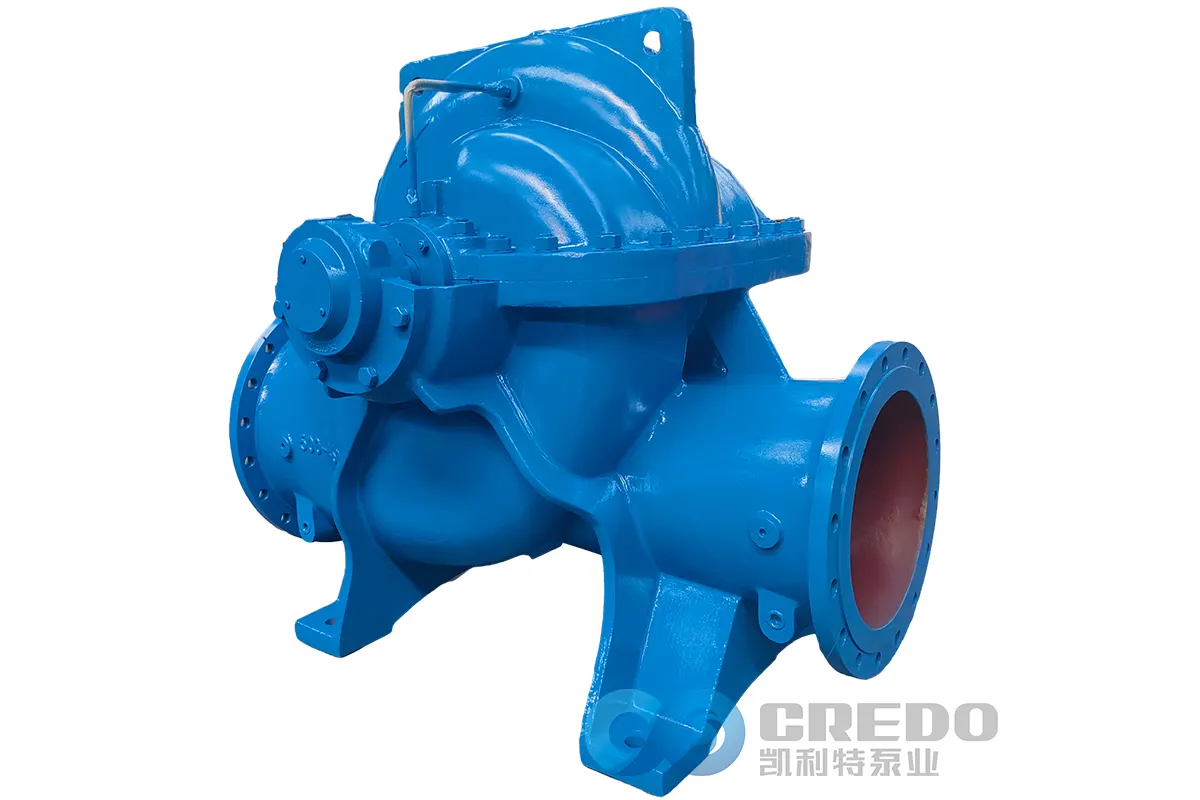
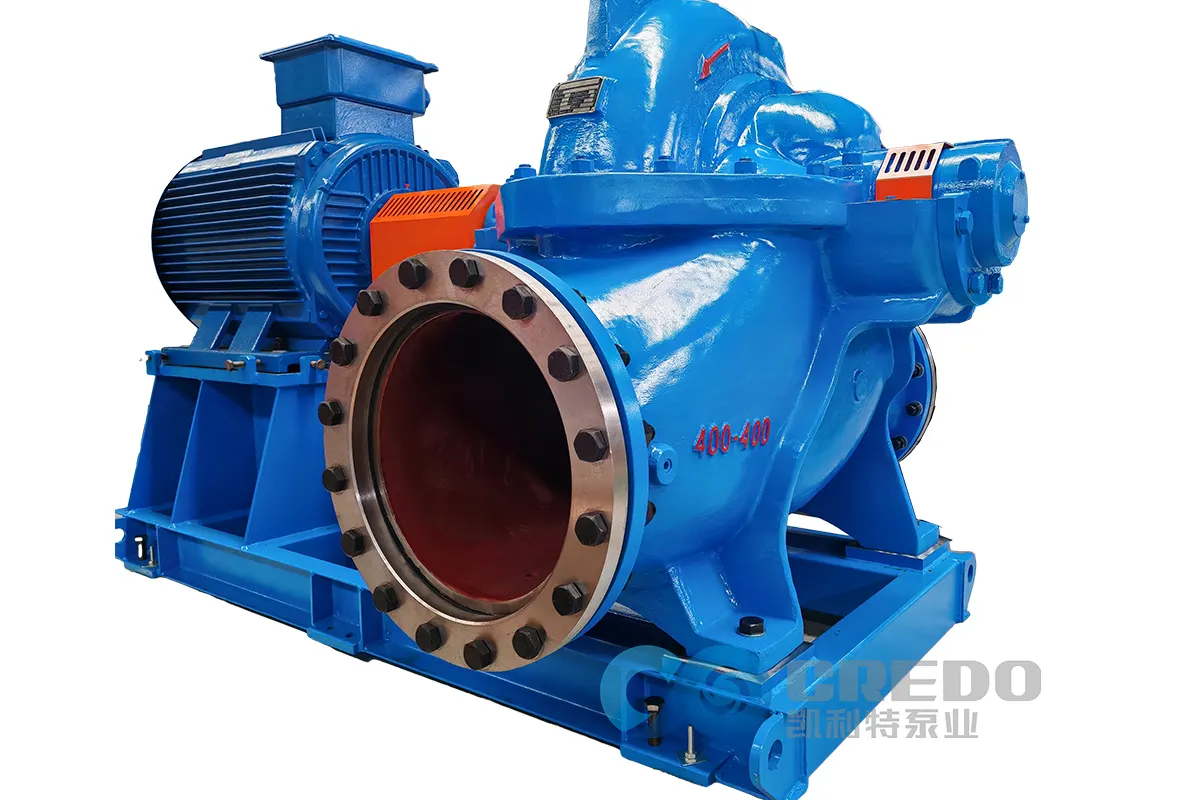
Mechanisms and Service Life Impact of Frequent Starts and Stops in Horizontal Split Case Pumps
During horizontal split case pump operation, many field maintenance personnel focus primarily on factors such as fluid corrosion, NPSH, and lubrication conditions, while overlooking the hidden damage caused by frequent pump starts and stops. Operational experience and field data indicate that, under otherwise comparable fluid and maintenance conditions, excessive daily starts and stops can significantly accelerate component fatigue and shorten equipment service life. In some applications, frequent cycling may reduce the interval between major overhauls by approximately 20%–30% and substantially shorten the replacement intervals of wear components.
The damage caused by frequent cycling is concentrated primarily during pump startup and shutdown. The underlying mechanisms can generally be attributed to four factors: hydraulic shock, inadequate lubrication, cyclic mechanical loading, and motor thermal fatigue.
1. Bearing Damage: Progressive Failure Caused by Boundary Lubrication
Horizontal split case pumps typically have relatively heavy rotors and high rotational inertia. During each startup, the rotor accelerates rapidly from standstill to its rated speed. The lubricating film may not have sufficient time to fully develop, causing the bearings to operate briefly under boundary or mixed lubrication conditions. This can result in increased metal-to-metal contact.
Repeated startup loads can accelerate rolling-element fatigue and surface spalling or, in the case of sleeve bearings, increase wear of the Babbitt lining. Under prolonged high-frequency cycling, bearing wear can progressively increase vibration levels.
Excessive vibration can, in turn, impose additional dynamic loads on the rotor. At stress-concentration areas of the shaft, such as keyways and shoulders, repeated bending loads may result in cyclic stresses. In severe cases, this can lead to shaft fatigue cracks and, ultimately, shaft failure.
2. Mechanical Seals: The Most Sensitive Component
The mechanical seal is one of the components most sensitive to repeated starts and stops.
During stable operation, a thin fluid film between the seal faces helps provide reliable sealing and minimize face-to-face contact. During startup and shutdown, however, pressure and operating conditions can fluctuate rapidly. The fluid film may repeatedly form and break down, resulting in intermittent dry running between the rotating and stationary seal faces.
Repeated dry contact can generate localized heat, cause thermal distortion of the seal faces, and contribute to microcracking. At the same time, the seal springs are subjected to repeated compression and relaxation cycles, which can gradually reduce their ability to maintain the required closing force.
Under otherwise normal conditions—including appropriate fluid properties, temperature, and installation alignment—a pump operating only 1–2 start/stop cycles per day may achieve a mechanical seal service life of around two years in some applications. If the pump is started and stopped more than five times per day, however, seal life may fall to approximately six months to one year, depending on the seal design and operating conditions. The probability of leakage-related failures also increases, resulting in higher maintenance costs and greater unplanned downtime risk.
3. Hydraulic Shock and Water Hammer: Hidden Sources of Structural Fatigue
Sudden pump startup or shutdown causes rapid changes in flow velocity within the piping system, potentially generating water hammer and pressure waves. These transient loads can be transmitted to the impeller, pump casing, flanges, valves, and other components.
Although horizontal split case pump casings are designed to withstand substantial operating loads, repeated pressure fluctuations can cause cyclic stress at areas of stress concentration, such as the impeller hub and changes in flow passage geometry. Over time, this may contribute to fatigue damage.
Pressure transients can also aggravate intermittent cavitation under certain operating conditions. Repeated cavitation can produce pitting and honeycomb-like erosion on impeller surfaces, gradually reducing hydraulic performance and pump efficiency.
In addition, repeated pressure fluctuations subject the split-case gasket to cyclic loading, accelerating gasket aging and increasing the risk of leakage at the casing joint. Repeated hydraulic and mechanical shocks may also contribute to gradual bolt loosening, making periodic inspection and retightening necessary.
4. Motor Thermal Fatigue: An Accelerator of Insulation Aging
A large motor driving a horizontal split case pump can draw a starting current several times higher than its rated current. With direct-on-line starting, the starting current may reach approximately 5–7 times the rated current, generating substantial heat in the motor windings over a short period.
If the motor is started and stopped repeatedly before sufficient heat has dissipated, the resulting thermal cycling can accelerate insulation aging. A commonly used engineering rule of thumb is that, within a given temperature range, every 10°C increase in operating temperature can approximately halve the expected insulation life.
Frequent high-current starting also increases electrical stress and arcing at contactor contacts, which may lead to contact erosion, welding, or sticking and increase the risk of motor control failures.
For high-voltage, high-power motors driving horizontal split case pumps, the allowable number of consecutive starts should be determined according to the motor manufacturer’s specifications and the applicable operating requirements. In many applications, a motor that is already thermally loaded may be permitted only one restart, while a cold motor may require a minimum interval of around 15 minutes between starts. For large-capacity pump units, an interval of 30 minutes or more may be recommended between consecutive starts, depending on the motor design and thermal condition.
Repeated short-interval starts or unnecessary jogging of a large pump should be avoided.
5. Recommended Practices: Control Cycling Frequency and Optimize Operating Procedures
This does not mean that horizontal split case pumps should never be started and stopped. The key is to control the cycling frequency and optimize the startup and shutdown procedures according to the actual application.
For applications requiring intermittent water supply, the appropriate system modification should be evaluated based on the operating conditions.
For relatively small flow fluctuations: a pressure tank or recirculation/bypass line may help reduce the need for frequent pump cycling.
For applications requiring a wider range of flow regulation: variable-frequency drive (VFD) control may be evaluated from both technical and economic perspectives. However, the allowable speed range should be determined based on the pump’s hydraulic design, minimum continuous stable flow, motor characteristics, and system requirements. A minimum speed of around 70% of rated speed is sometimes used as a practical guideline, but it should not be treated as a universal limit for every horizontal split case pump.
For startup: where the system and pump design permit, start the pump with the discharge valve closed or partially closed, then open the discharge valve gradually to bring the pump onto the required operating point.
For shutdown: gradually reduce the discharge flow before stopping the pump rather than abruptly interrupting power. Proper valve sequencing helps reduce hydraulic transients and water hammer.
Routine inspections should also place greater emphasis on vibration, mechanical seal leakage, and bearing temperature. Early detection of abnormal trends allows corrective action before fatigue or wear develops into a major failure.
Conclusion
For horizontal split case pumps, the greatest threat to service life is often not continuous operation itself, but uncontrolled and unnecessarily frequent cycling. Stable, continuous-duty operation is generally more consistent with the design characteristics of this type of pump.
Reducing unnecessary starts and stops, allowing adequate time between starts, and optimizing startup and shutdown procedures are among the most cost-effective ways to extend overhaul intervals, reduce component replacement frequency, and minimize unexpected equipment failures.
FAQ
Q1: How many times per day should a horizontal split case pump be started and stopped?
As a general operational guideline, it is advisable to keep daily start/stop cycles to no more than 2–3 times where practical. Frequent cycling can significantly accelerate wear and shorten the service life of components such as mechanical seals and bearings. However, the actual allowable number of starts should be determined based on the pump, motor, system design, and manufacturer’s recommendations.
Q2: How long should the interval between starts be for a horizontal split case pump?
For a cold motor, a starting interval of at least 15 minutes is commonly recommended in many applications, while a thermally loaded motor may be limited to one restart. For large-power horizontal split case pump units, an interval of 30 minutes or more may be advisable, depending on the motor’s thermal condition and manufacturer’s specified starting limitations.
Q3: How can the service life of a horizontal split case pump be extended?
The key measures include:
Limit unnecessary start/stop cycles.
Follow proper startup and shutdown procedures, including controlled valve operation.
Strengthen routine condition monitoring, with particular attention to vibration, bearing temperature, and mechanical seal leakage.
Consider system modifications, such as pressure tanks, bypass/recirculation lines, or VFD control, when frequent cycling is inherent to the application.
Q4: What are the risks of frequently starting and stopping a horizontal split case pump?
Frequent starts and stops can accelerate bearing wear, mechanical seal leakage, impeller fatigue and erosion, shaft fatigue, and motor insulation aging. In severe cases, repeated cycling and associated hydraulic or mechanical loads may contribute to shaft failure or motor damage.
Related Posts