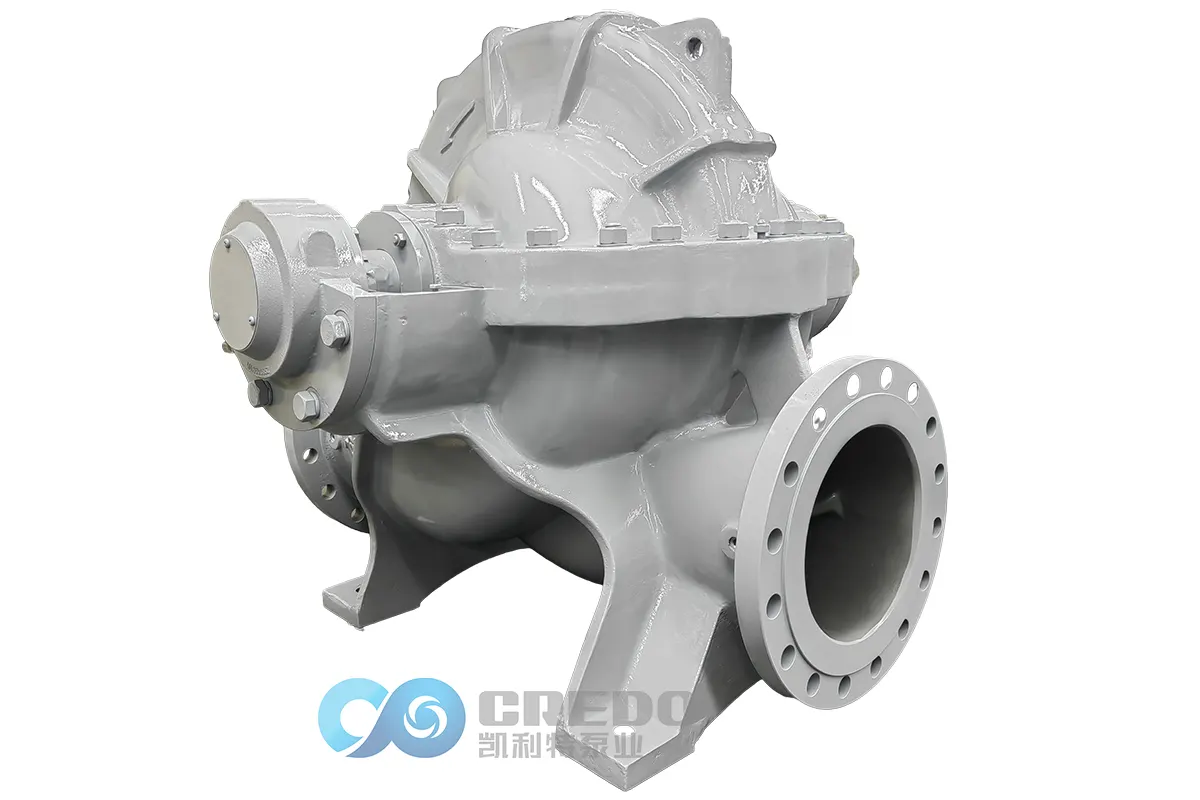
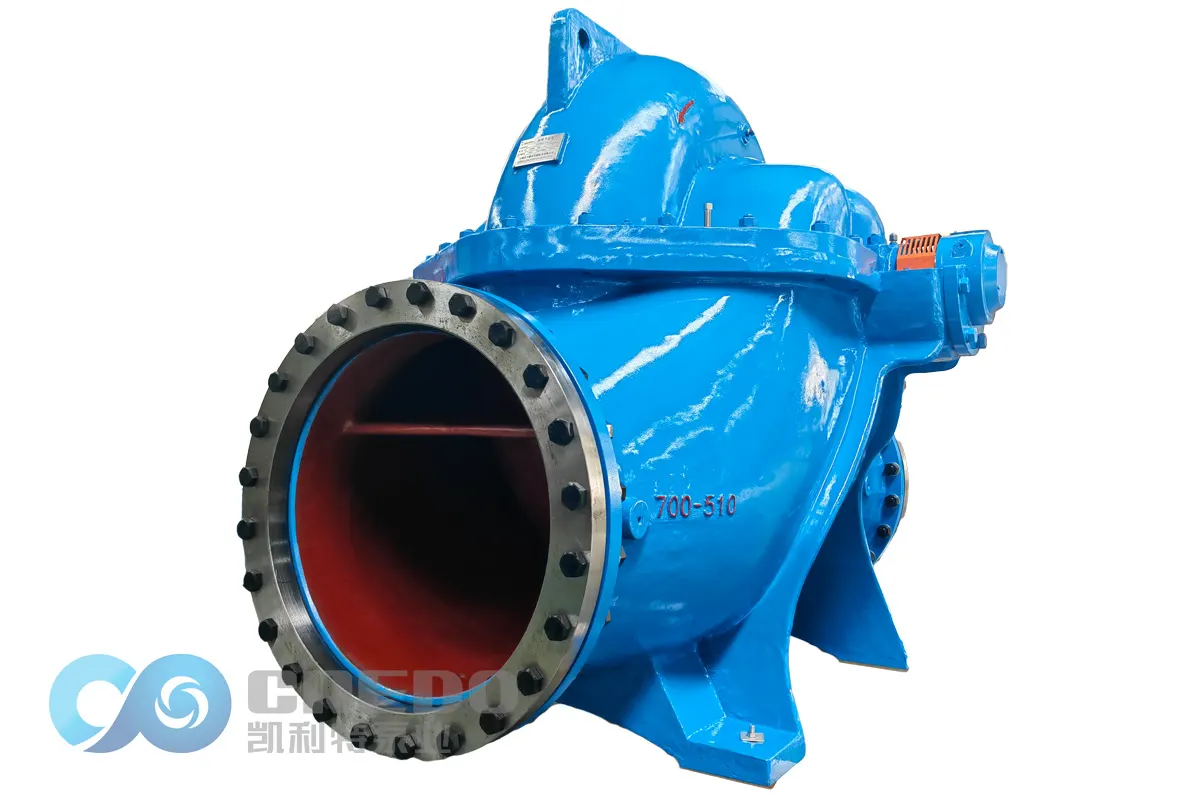
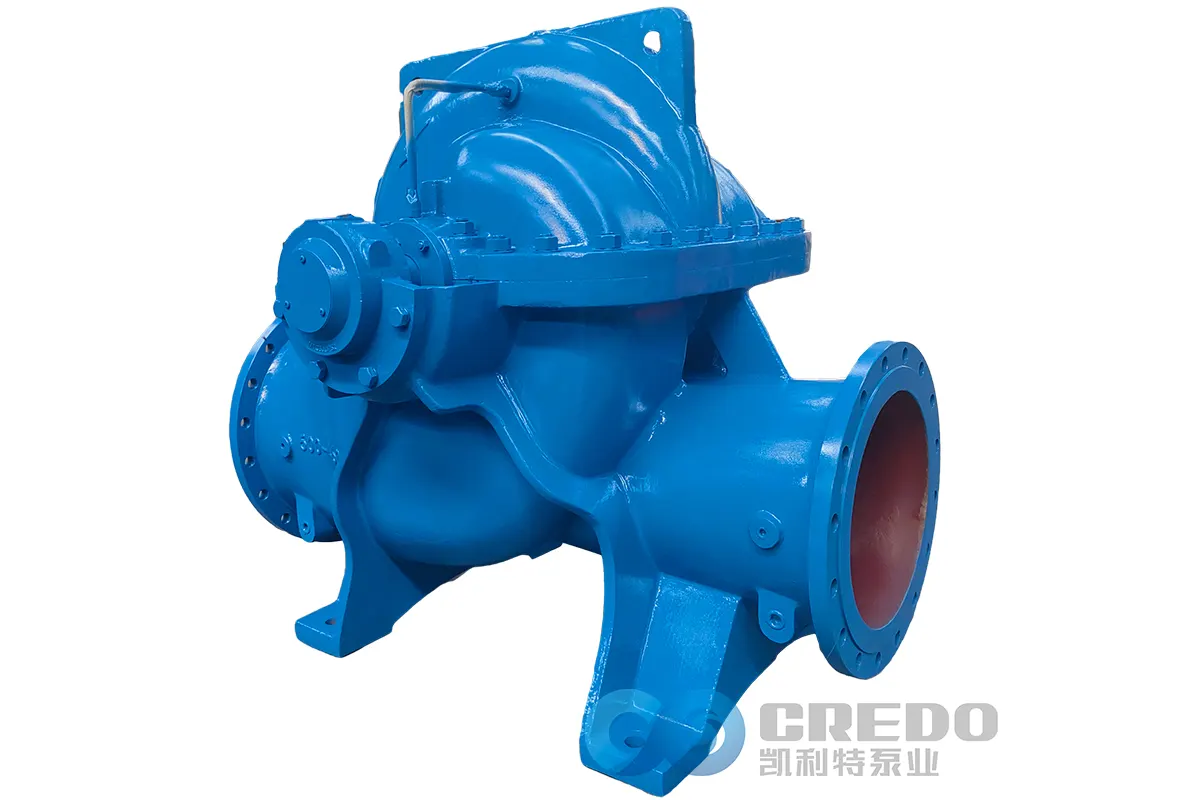
Axial Split Case Pump Bearing Overheating and Excessive Vibration: Causes and Solutions
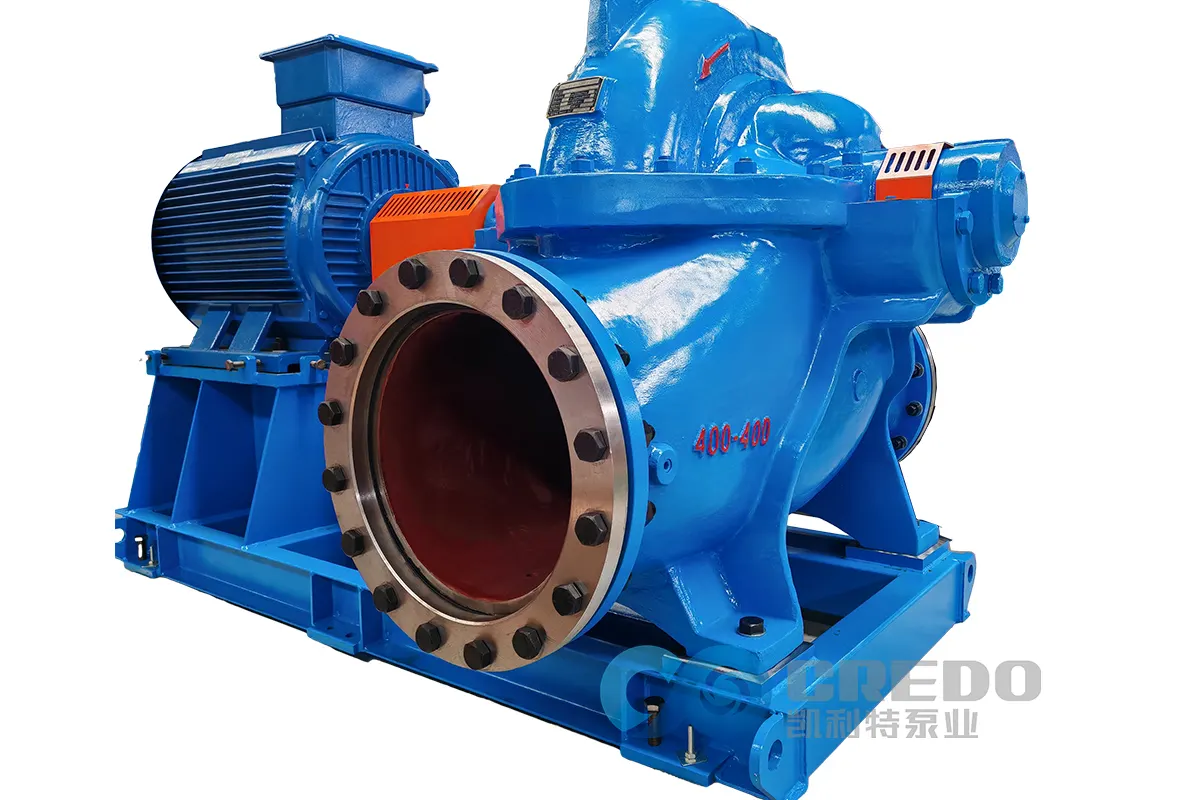
Bearing overheating and excessive vibration are among the most common fault combinations in axial split case pumps. The two conditions can reinforce each other: excessive bearing temperature can degrade the lubricant and increase internal clearances, which in turn increases vibration. Excessive vibration, meanwhile, accelerates bearing fatigue and raises operating temperature, creating a vicious cycle. In severe cases, this can lead to bearing seizure, impeller damage, and unplanned pump shutdowns.
Based on the requirements of ISO 10816-7 and API 610, this article provides a practical, step-by-step troubleshooting procedure that can be applied in the field.
I. Assessment Criteria: Defining Abnormal Conditions According to International Standards
Before troubleshooting, the acceptable operating limits should be clearly established to avoid misdiagnosis.
Vibration evaluation should follow ISO 10816-7, Mechanical vibration — Evaluation of machine vibration by measurements on non-rotating parts — Part 7: Rotodynamic pumps for industrial applications. The standard classifies pumps according to reliability and application into Category I (high-reliability applications) and Category II (general applications), and evaluates vibration based on the RMS vibration velocity measured at the bearing housing.
| Zone | Category I (≤200 kW) | Category II (≤200 kW) | Meaning |
| A | ≤2.5 mm/s | ≤3.2 mm/s | Good condition for a new machine |
| B | ≤4.0 mm/s | ≤5.1 mm/s | Suitable for long-term operation |
| C | ≤6.6 mm/s | ≤8.5 mm/s | Corrective action required within a defined period |
| D | >6.6 mm/s | >8.5 mm/s | Continuous operation prohibited |
Note: The above values are typical limits for rigidly mounted pumps rated at ≤200 kW. For pumps above 200 kW or with flexible mounting, the zone boundaries are higher and should be verified against the applicable standard.
For critical applications in the oil, gas, and petrochemical industries, API 610 applies more stringent requirements. Within the Preferred Operating Region (POR), the overall bearing housing vibration limit is 3.0 mm/s RMS, while any discrete-frequency component should not exceed 2.0 mm/s RMS.
Bearing Temperature
API 610 specifies the following limits:
Pressure-oil lubrication: oil outlet temperature <70°C; bearing metal temperature <93°C.
Oil-ring or splash lubrication: oil sump temperature <82°C; temperature rise ≤40 K.
As a practical field guideline, the external temperature of rolling-element bearing housings should generally remain below 80°C, with a temperature rise of no more than 40°C above ambient.
If the temperature continuously approaches the allowable limit while vibration is also increasing, the pump should be shut down and inspected to prevent accelerated bearing fatigue and premature failure.
II. First Troubleshooting Step: Check Lubrication and Cooling Systems
Lubrication problems are one of the primary causes of bearing overheating in axial split case pumps and should therefore be checked first.
1. Incorrect Lubricant Selection, Overfilling, or Underfilling
The lubricant for rolling-element bearings in axial split case pumps should be selected according to the pump manufacturer’s instructions and the actual operating conditions. ISO VG 32 or VG 46 industrial lubricants are commonly used, with viscosity classification based on ISO 3448.
For oil-lubricated bearings, the oil level should generally remain around 1/2 to 2/3 of the sight glass. An excessive oil level increases churning losses and heat generation, while insufficient oil can result in inadequate lubrication and metal-to-metal contact.
For grease-lubricated bearings, over-greasing increases internal friction and can cause a rapid temperature rise. As a general guideline, grease should typically occupy about 1/3 to 1/2 of the available bearing housing space, subject to the bearing manufacturer’s recommendations.
2. Lubricant Degradation or Contamination
Emulsified oil, indicated by a milky or cloudy appearance, darkened oil, or visible metallic particles, can damage the lubricating film and promote metal-to-metal contact within the bearing. This is often accompanied by a progressive increase in vibration.
Oil samples can be taken for analysis of viscosity, water content, and contamination levels.
3. Cooling Circuit Problems
For water-cooled bearing housings, insufficient cooling-water flow, blocked passages, or scale buildup can reduce heat dissipation and cause the bearing temperature to continue rising.
Check the inlet and outlet water temperatures and the temperature differential. Clean or flush the cooling circuit as necessary and verify that the relevant valves are fully open.
Typical signs of lubrication problems: bearing temperature rises gradually, while vibration increases progressively as the temperature rises. After opening the bearing housing, degraded or emulsified lubricant may be visible.
III. Second Troubleshooting Step: Check Shaft Alignment and Foundation Integrity
Misalignment is one of the most common mechanical causes of excessive vibration in axial split case pumps.
Use a laser shaft-alignment system to check the alignment. As a general reference for operating speeds of 1,500–3,000 rpm, typical alignment targets may be around ≤0.05 mm offset and ≤0.10 mm/m angular misalignment, but the pump and coupling manufacturer’s specified tolerances should take precedence.
Excessive offset or angular misalignment creates cyclic loads at the coupling, which are transmitted to the bearings at both ends of the pump and can result in bearing overheating and premature fatigue failure.
Foundation and anchor-bolt looseness should also be checked. Insufficient anchor-bolt preload, cracked grout, or unsupported baseplate shims can cause structural resonance and significantly increase vibration, particularly during startup, shutdown, or changes in flow rate.
During inspection, recheck anchor-bolt torque in a diagonal sequence and tap-test the baseplate for signs of unsupported areas or gaps.
Piping Strain
Excessive external loads from rigidly connected suction and discharge piping can deform the pump casing and shift the shaft alignment, placing continuous additional loads on the bearings.
Loosen the piping flange connections and observe whether the pump casing moves. Any measurable movement may indicate excessive piping strain.
IV. Third Troubleshooting Step: Check the Rotor, Hydraulic Conditions, and Bearings
Rotor Imbalance
Corrosion, scaling, or erosion of the impeller can create mass eccentricity and cause rotor imbalance. The resulting vibration is typically dominated by the 1× running-speed component.
Impeller dynamic balancing should generally comply with ISO 21940-11, Grade G2.5, unless a different balance grade is specified by the manufacturer.
Excessive residual unbalance continuously loads the bearings and can cause the bearing temperature to rise progressively.
Hydraulic Problems
Cavitation and operation outside the Preferred Operating Region (POR) can generate low-frequency hydraulic pulsations and excite bearing vibration.
Typical symptoms include a crackling or gravel-like noise, fluctuating discharge pressure, and vibration that changes significantly with flow rate.
Check the suction pressure and verify that NPSHA exceeds NPSHR with an adequate margin to prevent cavitation caused by insufficient available NPSH.
Bearing Damage
Pitting or spalling on bearing raceways and rolling elements, as well as excessive internal clearance, can indicate bearing deterioration.
The vibration spectrum may show characteristic bearing defect frequencies, including BPFO, BPFI, BSF, and FTF, while bearing temperature may rise rapidly.
The allowable radial internal clearance should be determined from the bearing manufacturer’s specifications for the specific bearing type and size. If clearance increases to approximately 2–3 times the original design value, or exceeds the manufacturer’s replacement limit, the bearing should be replaced.
For example, for some deep-groove ball bearings used in pumps with shaft diameters of approximately 20–50 mm, a clearance exceeding 0.1–0.2 mm may indicate the need for replacement; however, the manufacturer’s specified limits should always take precedence.
V. Troubleshooting Sequence and Safe Maintenance Recommendations
Follow a non-invasive inspection first, followed by disassembly only when necessary approach:
Collect temperature and vibration-spectrum data → Check lubrication and cooling → Recheck shaft alignment, anchor bolts, and piping strain → Verify rotor balance → Disassemble and inspect the bearings
Avoid prolonged operation in the Zone D vibration range. ISO 10816-7 identifies Zone D as an unacceptable condition associated with a high risk of equipment damage.
After corrective action, conduct a loaded test run and recheck bearing temperature and vibration. The pump should return to the applicable Zone B range under normal operating conditions before being placed back into long-term service.
Establish routine trend monitoring and regularly record vibration and temperature data. This helps shift maintenance from reactive repairs to condition-based and preventive maintenance.
VI. Quick Troubleshooting Reference
| Symptoms | Priority Check | Verification Method |
| Temperature rises gradually + vibration increases simultaneously | Lubrication failure / lubricant degradation | Check oil level, lubricant condition, and viscosity |
| Temperature remains normal but vibration is excessive | Shaft misalignment / foundation looseness | Laser alignment + anchor-bolt torque check |
| Strong 1× running-speed component + stable vibration | Rotor imbalance | Dynamic balancing verification |
| Vibration changes significantly with flow rate + crackling noise | Cavitation / hydraulic pulsation | Check NPSHA and operating point relative to POR |
| Increased high-frequency envelope energy + rapid temperature rise | Bearing damage | Vibration spectrum analysis + bearing inspection after disassembly |
| Vibration increases significantly during startup or shutdown | Foundation resonance / piping strain | Tap-test + observe pump movement after loosening piping flanges |
FAQ
Q1: At what vibration level should an axial split case pump be shut down?
A: According to ISO 10816-7, when vibration enters Zone D—above 6.6 mm/s for Category I pumps or 8.5 mm/s for Category II pumps in the ≤200 kW range—the pump should be safely shut down as soon as practical.
For applications governed by API 610, such as critical oil, gas, and petrochemical services, an overall vibration level above 3.0 mm/s RMS requires investigation, while any discrete-frequency component above 2.0 mm/s RMS should be investigated to identify the source of the problem.
Q2: Is a bearing temperature of 75°C considered excessive?
A: API 610 specifies an oil-sump temperature below 82°C for oil-ring or splash lubrication and an oil outlet temperature below 70°C for pressure-oil lubrication.
In field operation, however, a rolling-element bearing housing temperature of 75°C may still be within the applicable limit. If it is more than 15°C above the historical baseline, however, the upward trend should be investigated. Bearing temperature should always be assessed together with vibration and other operating parameters rather than by absolute temperature alone.
Q3: The oil level is normal, but the bearing is still overheating. What could be the cause?
A: Common causes include:
Incorrect lubricant viscosity, such as excessively viscous oil during cold-weather operation.
Insufficient cooling-water flow or fouling/blockage in the cooling circuit.
Insufficient bearing internal clearance or excessive interference during installation.
Additional bearing loads caused by coupling misalignment.
Shaft movement caused by piping strain.
The troubleshooting sequence described in this article should be followed to systematically eliminate these potential causes.
Q4: Does a high 1× vibration component always mean rotor imbalance?
A: No. Rotor imbalance is a common cause of a dominant 1× running-speed component, but severe misalignment and structural resonance can also produce strong 1× vibration.
The diagnosis should therefore consider axial vibration characteristics—misalignment may produce a prominent 2× running-speed component—together with phase analysis and other spectrum characteristics.
Q5: Can a bearing with excessive internal clearance be adjusted instead of replaced?
A: Rolling-element bearing internal clearance is established during manufacture and normally increases as the bearing wears. It cannot be restored simply by adjustment.
If the clearance exceeds the specified replacement limit, the bearing should be replaced as a complete unit. If the clearance is increased but remains within the manufacturer’s allowable limit, the monitoring interval can be shortened and the trend closely tracked. However, the clearance should not be artificially reduced by adjustment.
Related Posts