Bearing Lubrication Methods and Maintenance Intervals for Vertical Turbine Pumps
Bearing lubrication directly affects the availability and service life of vertical turbine pumps. This article provides a practical maintenance guide covering four key areas: lubrication method selection, oil and grease selection, maintenance intervals, and oil change criteria. It also explains the relevant evaluation criteria with reference to international standards such as ISO 4406, ISO 6743, and ISO 10816.
1. Why Bearing Lubrication Is a Top Maintenance Priority for Vertical Turbine Pumps
The rotating assembly of a vertical turbine pump is supported by multiple line shaft bearings arranged along the shaft. Power is transmitted from the motor at the top of the pump through the long shaft to the impellers. If a bearing suffers from insufficient lubrication, water ingress, or contamination, the consequences can range from increased vibration and noise to bearing seizure, shaft failure, pump assembly damage, and complete system shutdown.
Lubrication involves much more than simply adding oil or grease. It creates a lubricating film that separates the shaft from the bearing surface, dissipates frictional heat, and helps remove wear particles. Proper sealing is also essential to prevent the pumped liquid and external contaminants from entering the lubrication system. Therefore, the choice of lubrication method, the correct lubricant, and the maintenance interval all have a direct impact on pump reliability and service life.
2. Common Bearing Lubrication Methods for Vertical Turbine Pumps
2.1 Oil Lubrication (Oil Bath or Splash Lubrication)
Many vertical turbine pumps use an oil bath or splash lubrication system for their intermediate bearings. The bearing housing maintains the specified oil level, and as the shaft rotates, it carries and distributes oil to the bearing surfaces.
Advantages: Good heat dissipation, a stable lubricating film, and suitability for medium- to high-speed operation and relatively heavy loads.
Limitations: An excessively high oil level can cause churning and overheating, while an insufficient oil level can lead to inadequate lubrication.
Maintenance priorities: Keep the oil level near the midpoint of the sight glass, as specified by the manufacturer, and check regularly for oil leakage and emulsification.
2.2 Grease Lubrication
Motor bearings at the top of the pump, some externally mounted bearings, and bearings operating at relatively low speeds may use lithium-based grease.
Grease provides good sealing, is easy to maintain, and is less prone to leakage than liquid oil. It is suitable for bearing locations where a continuous oil supply is impractical.
However, grease generally dissipates heat less effectively than circulating oil, and uneven grease distribution can occur. Overgreasing may also cause excessive bearing temperatures.
Always use the grease grade and quantity specified in the equipment manual. Avoid overgreasing, and remove old grease and purge any excess grease as required by the bearing design.
2.3 Process-Liquid Lubrication
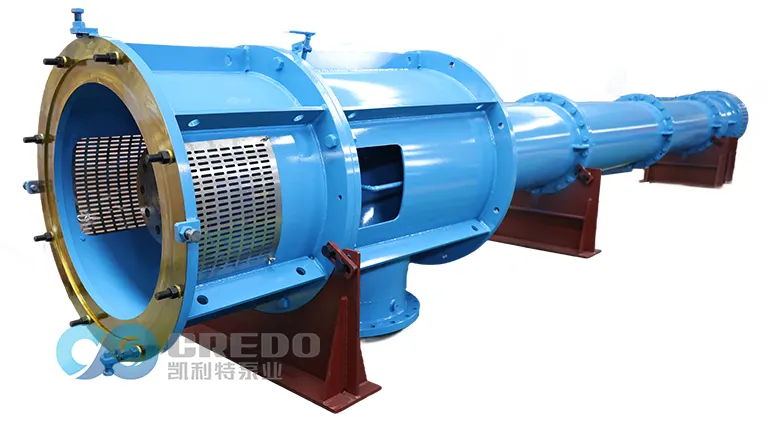
Where the pump design permits, the pumped liquid itself can lubricate the lower guide bearings. This arrangement is commonly used with rubber or polymer bearings when handling clean liquids.
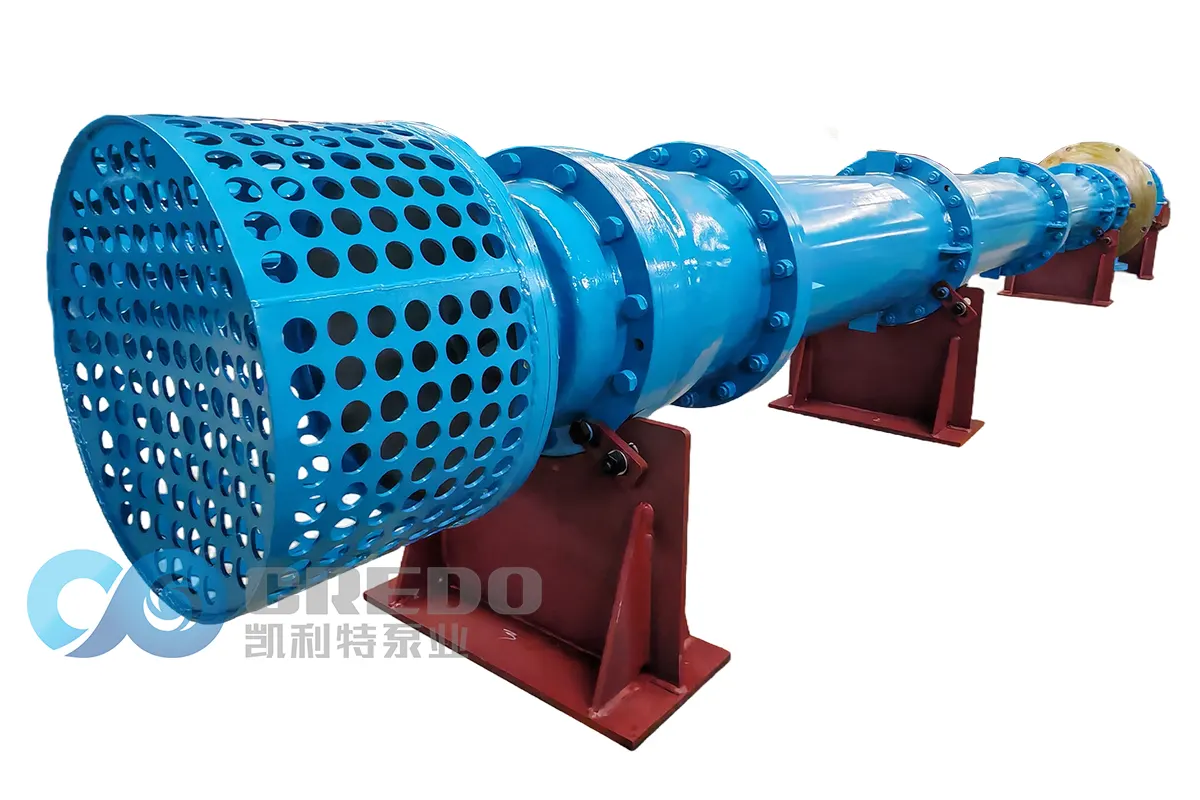
This method places strict requirements on liquid cleanliness. Sand and suspended particles can accelerate bearing wear. Suitable suction-side screening should be provided where appropriate, and the concentration of suspended solids should be controlled.
During operation, monitor vibration, noise, and motor current for signs of abnormal bearing wear or deterioration.
2.4 Forced Lubrication and External Oil Supply
Large pumps, high-speed units, and equipment operating continuously under heavy loads may be equipped with a centralized oil lubrication system. Such systems typically include an oil pump, cooler, filter, and associated piping to provide a continuous supply of lubricant.
Advantages: Oil flow and temperature can be controlled, and the oil can be filtered continuously during operation.
Limitations: The system requires additional instrumentation, control equipment, and interlocks.
Maintenance priorities: Monitor oil pressure, temperature, flow rate, and filter condition, including differential pressure across the filter where applicable.
2.5 Auxiliary Sealing and Flushing
Lubrication systems commonly work in conjunction with mechanical seals, packing glands, and bearing seals.
When handling liquids containing solids, corrosive substances, or high-temperature media, an appropriate flushing, quench, or barrier-fluid arrangement may be required, depending on the seal design and operating conditions. These measures help prevent process-liquid ingress and contamination of the lubricant.
3. Maintenance Intervals: Follow Equipment Manuals and Monitor Actual Conditions
The following table provides general guidance. Actual maintenance intervals must comply with the manufacturer’s technical documentation and the results of the site-specific risk assessment.
| Maintenance item | General recommended interval | Key inspection points |
| Routine inspections | Every shift or daily | Oil temperature, oil level, abnormal noise, vibration, and seal leakage |
| Grease-lubricated bearings | Every 3–6 months, or as specified in the manual | Grease quantity, purging of old grease, temperature rise, and noise |
| Oil-lubricated systems | Every 6–12 months | Oil level, color, emulsification, contamination, and filter condition |
| Lubricating oil replacement | Annually or every 3,000–8,000 operating hours | Adjust the interval based on oil analysis results |
| Forced lubrication systems | Monthly inspections, with servicing at manufacturer-specified intervals | Oil pressure, temperature, flow rate, and filter differential pressure |
| Major overhaul and bearing inspection | Every 2–4 years, or based on condition monitoring | Bearing clearance, wear, shaft alignment, shaft straightness, and seal condition |
The key principle is to avoid following a fixed schedule without considering actual operating conditions.
The first oil change after commissioning a new pump should generally be scheduled earlier than subsequent changes to remove wear debris generated during the initial running-in period.
Inspection intervals should also be shortened when the pump handles liquids containing solids, experiences frequent starts and stops, operates in hot or humid environments, or runs continuously under demanding conditions.
Before replacing the lubricating oil, consider testing its viscosity, water content, particle contamination level, and wear-metal content. Using oil analysis to determine the replacement interval is generally more reliable than changing the oil solely according to a fixed calendar schedule.
4. Turning International Standards into Practical Maintenance Requirements
The difference between effective and ineffective lubrication maintenance often comes down to whether decisions are based on measurable criteria. Instead of relying on subjective judgments such as adding oil whenever the level looks low, maintenance teams should incorporate recognized industry standards into routine procedures to make decisions more objective, traceable, and verifiable.
Oil Cleanliness: Use ISO 4406 to Assess Contamination
Oil contamination is a major concern in both oil-bath lubrication and forced lubrication systems. In many cases, oil cleanliness is just as important as maintaining the correct oil level.
ISO 4406 classifies the cleanliness of hydraulic and lubricating fluids according to the number of particles of specified sizes in each milliliter of fluid. Lower contamination codes indicate cleaner oil.
Maintenance personnel do not need to count particles manually, but they should understand the importance of monitoring oil cleanliness. Before deciding whether to replace or continue using lubricating oil, test at least the particle contamination level, water content, and viscosity.
If the results exceed the applicable limits, corrective action is required. If the oil remains within the specified limits, the replacement interval may be extended where the equipment manufacturer and operating conditions permit. This approach can be more economical and reliable than automatically replacing the oil once a year.
Lubricant Selection: Use ISO 6743 as a Reference
Incorrect lubricant selection is not always a matter of quantity; the lubricant grade itself may be unsuitable.
The ISO 6743 series classifies lubricants according to their intended applications and operating conditions. The specific lubricant grade required for a pump bearing must be confirmed against the manufacturer’s documentation.
Two key considerations should guide lubricant selection:
Operating temperature: Ensure that the lubricant is suitable for the actual operating temperature. For grease, the dropping point alone is not sufficient to determine its maximum continuous operating temperature; the manufacturer’s recommended temperature range must also be observed.
Water exposure: Where moisture or water ingress is a concern, select a grease with appropriate water resistance and corrosion protection. Do not substitute ordinary general-purpose grease for the specified lubricant without confirming compatibility and suitability.
Vibration Criteria: Use ISO 10816 to Assess Whether Intervention Is Required
Bearing deterioration often produces changes in vibration before a significant temperature rise becomes apparent.
The ISO 10816 series established vibration evaluation criteria for machinery based on factors such as machine type, power, foundation characteristics, and installation conditions. The applicable limits depend on the relevant part of the standard and the equipment classification.
As part of routine maintenance, record vibration measurements at consistent locations using a portable vibration meter. Monthly measurements can provide a useful baseline, although the appropriate monitoring frequency depends on operating conditions and equipment criticality.
Trend analysis is often more useful than a single reading. If vibration at the same measurement point increases consistently over three consecutive months, an inspection should be scheduled even if the readings remain within the applicable limits. Do not wait until an alarm is triggered before investigating a deteriorating trend.
Design and Acceptance: Refer to ISO 5199 and ANSI/HI Standards
For new pump procurement or major-overhaul acceptance, ISO 5199, which specifies technical requirements for centrifugal pumps, and relevant ANSI/HI standards can serve as references in contractual technical specifications.
Relevant standards may include ANSI/HI 2.1–2.2 and ANSI/HI 9.6.4, covering aspects of vertical pump nomenclature, design, application, installation, and operation, depending on the edition and scope applicable to the project.
Particular attention should be paid to bearing arrangement, accessibility of lubrication points, seal flushing provisions, and the space available for inspection and maintenance.
Maintainability is determined in part during the design and manufacturing stages, long before the pump is installed at the site.
Please note that standards are periodically revised. Always refer to the currently applicable editions, contractual technical requirements, and the manufacturer’s written documentation. Projects in highly regulated industries, such as oil and gas and petrochemicals, may also need to comply with additional industry-specific standards, including API 610 where applicable.
5. A Practical Maintenance Checklist for Operators
Maintenance personnel commonly search for answers to questions such as:
What should I do if a vertical turbine pump bearing makes abnormal noise?
How often should the oil be changed in a deep-well pump?
What is the normal operating temperature for a bearing?
From a maintenance management perspective, it is useful to establish two basic records: a lubrication specification card and an operating condition log.
The lubrication card should identify each lubrication point, the specified lubricant grade, the required quantity, and the maintenance interval.
The operating condition log should record oil level, oil temperature, vibration, motor current, and the date of the most recent oil change.
If bearing temperature continues to rise, noise becomes deeper or more pronounced, the oil turns milky due to emulsification, or vibration exceeds the applicable limits, stop the pump when necessary and investigate the cause. Do not attempt to mask the problem simply by adding more lubricant.
Conclusion
Effective bearing maintenance for vertical turbine pumps is not about adding lubricant as frequently as possible. It is about selecting the right lubrication method, using the correct lubricant, controlling contamination, and determining maintenance intervals based on operating data.
By quantifying oil cleanliness, grease selection, and vibration trends, maintenance teams can turn experience-based judgments into repeatable, standardized procedures, reducing the risk of unplanned downtime and extending pump service life.
Frequently Asked Questions (FAQ)
Q1: What Is the Normal Bearing Temperature for a Vertical Turbine Pump?
A: There is no single temperature limit that applies to every operating condition.
As a general reference, a rolling-element bearing’s outer-ring temperature rise above ambient temperature of no more than 40–45°C, with an absolute temperature not exceeding approximately 75–80°C, may be acceptable in some applications. However, these figures are not universal acceptance limits. The applicable limits must be confirmed against the bearing manufacturer’s recommendations and the pump’s operating requirements.
Sliding bearings and oil-lubricated bearings must be evaluated according to the manufacturer’s specifications.
Temperature trends are particularly important. If the bearing temperature rises by more than 5°C over two consecutive shifts under comparable operating conditions, or if the increase is accompanied by abnormal noise or vibration, investigate possible causes such as insufficient lubrication, grease degradation, water contamination, or misalignment. Do not simply raise the alarm threshold to accommodate the temperature increase.
Q2: Should a Vertical Turbine Pump Use Oil or Grease for Bearing Lubrication?
A: The choice depends on the bearing location and operating conditions.
Intermediate guide bearings operating continuously at medium to high speeds, particularly where heat dissipation is important, may use oil-bath, splash, or forced oil lubrication, depending on the pump design.
Grease lubrication is often suitable for motor bearings at the top of the pump, externally mounted bearings, and other bearing locations where continuous oil supply is impractical.
Process-liquid lubrication is suitable only when the pump design permits it and the liquid is sufficiently clean for the bearing material and operating conditions.
A single pump may use a combination of oil and grease lubrication. The correct arrangement must be determined for each bearing rather than applying one lubrication method to the entire pump.
Q3: How Often Should Lubricating Oil Be Changed? Is There a Fixed Interval?
A: Oil should not be changed solely according to a fixed time interval.
The first oil change after commissioning a new pump should generally take place earlier to remove metal particles generated during the running-in period.
For routine operation, annual replacement or replacement every 3,000–8,000 operating hours may serve as a general reference, but the appropriate interval depends on the manufacturer’s recommendations, oil condition, and operating environment. More frequent inspections or oil changes may be necessary when handling liquids containing solids, operating in hot and humid environments, or starting and stopping the pump frequently.
Before replacing the oil, consider testing its viscosity, water content, particle contamination level, and wear-metal content. The results provide a more reliable basis for determining the replacement interval than adhering rigidly to an annual schedule.
If the oil becomes milky due to water contamination, thickens abnormally, or contains visible metal particles, investigate the cause immediately and replace the oil as required.
Q4: Should the Pump Be Shut Down if a Bearing Makes Abnormal Noise but Its Temperature Is Normal?
A: Prompt investigation is necessary. A normal bearing temperature does not rule out a developing fault.
Metallic rubbing noises and periodic knocking can appear before a significant temperature rise. Possible causes include insufficient lubrication, foreign-particle ingress, excessive bearing clearance, and shaft bending.
Record vibration data, including frequency spectra where available, and review the motor current trend. Check potential causes associated with the process liquid, shaft sealing, and lubrication system before determining whether the pump needs to be shut down and the bearing housing opened for inspection.
If the noise indicates active mechanical contact or an immediate risk of damage, stop the pump in accordance with the site’s operating and safety procedures.
Q5: Is More Grease Always Better for Bearing Lubrication?
A: No. Overgreasing can increase churning losses and frictional heat, leading to higher bearing temperatures. It may also obstruct grease relief passages.
Always follow the manufacturer’s specified grease grade and quantity. Where the bearing design allows, apply grease in controlled amounts while allowing excess grease and old grease to escape through the designated relief outlet.
Remove purged grease promptly to prevent blockage and secondary contamination. Do not assume that adding more grease will compensate for an incorrect lubricant grade or an underlying bearing fault.
Q6: Must ISO 4406 and ISO 10816 Be Followed in Every Detail?
A: Routine maintenance does not require every provision to be applied indiscriminately, but the underlying principles should be understood and used appropriately.
ISO 4406 provides a method for classifying oil contamination, while the ISO 10816 series provides machinery vibration evaluation criteria. Both support condition-based maintenance by replacing subjective judgments with measurable data.
For formal acceptance testing and contractual technical specifications, cite the currently applicable editions and follow the manufacturer’s documentation and relevant industry requirements, including API 610 for applicable oil and gas and petrochemical applications.
Q7: Why Do Bearings with Process-Liquid Lubrication Wear Out So Easily?
A: Process-liquid-lubricated bearings rely directly on the pumped liquid for lubrication and do not have an independent oil supply to provide protection.
If the liquid contains sand, welding slag, scale, or excessive suspended solids, abrasive wear can develop between the bearing and shaft sleeve, accelerating clearance growth and reducing bearing service life.
The main preventive measures are to install appropriately selected suction-side screening where required, maintain adequate suction submergence, control the solids content of the pumped liquid, and monitor vibration and motor current for early signs of deterioration.
The filtration arrangement must be suitable for the pump’s hydraulic requirements and must not introduce excessive suction losses or create a risk of blockage.
Related Posts