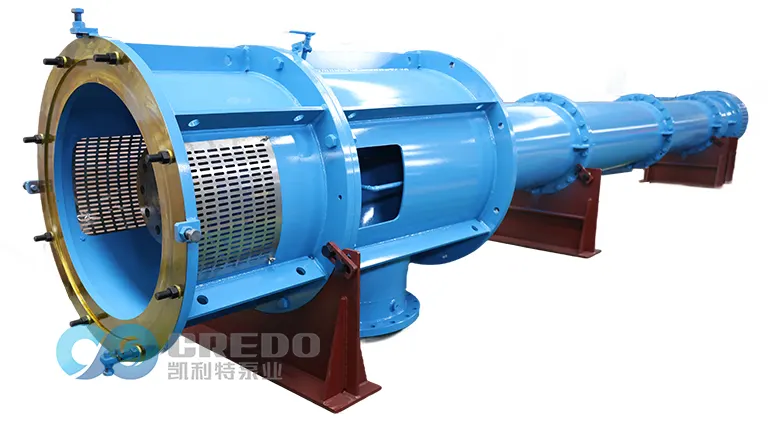
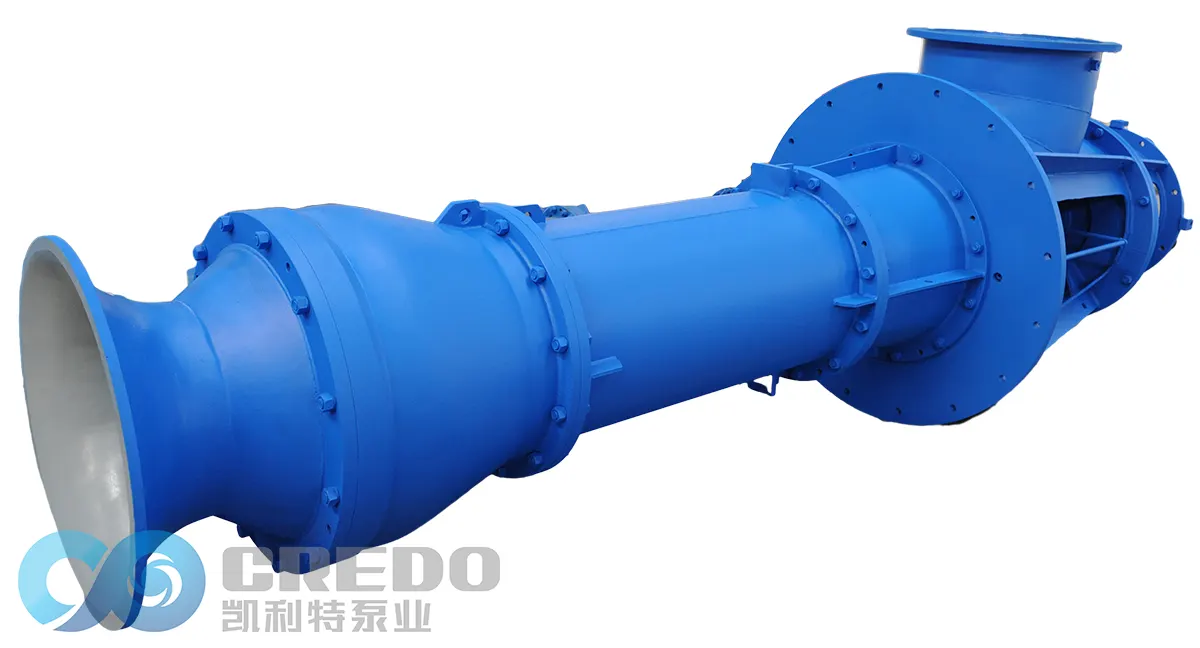
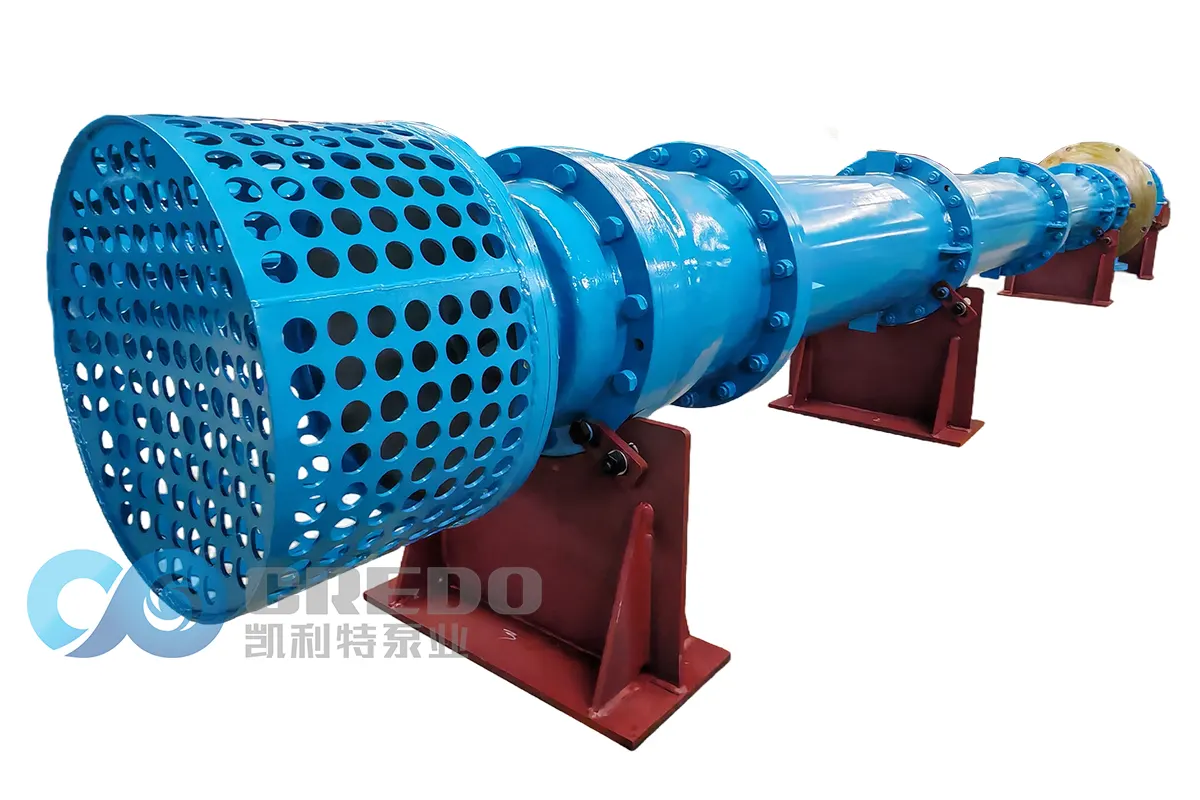
Vertical Lineshaft Turbine Pump: Operating Conditions and Industry Applications
The vertical lineshaft turbine pump is suitable for deep water intake and reservoir water transfer scenarios. The motor is positioned above the liquid surface, while the pump head and impeller are submerged. It offers advantages such as no need for priming, no risk of cavitation before startup, compact footprint, and adaptability to deep water conditions. This article presents its core operating characteristics, mainstream industry applications, and selection pitfalls in a clear tabular format.
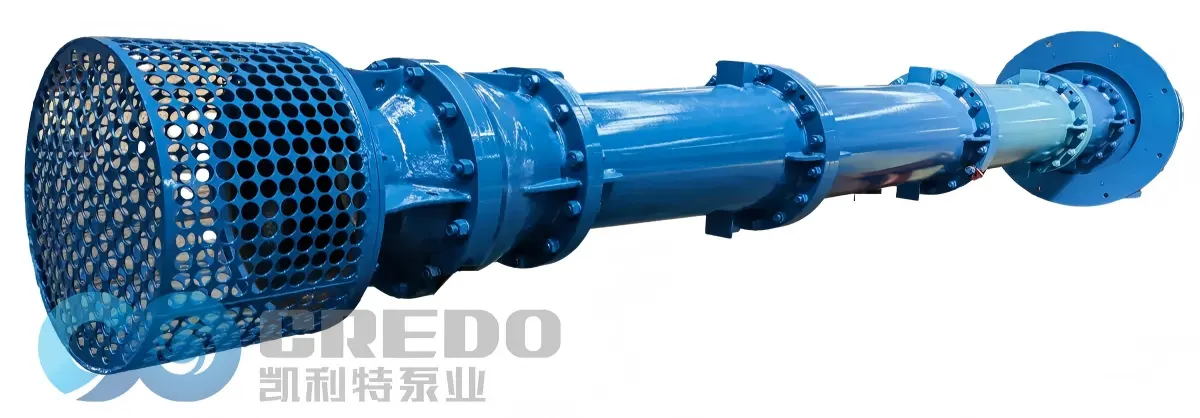
I. Core Operating Characteristics (Overview Table)
| Operating Parameter | Applicable Range | Notes & Limitations |
| Flow Range | Medium to large flow (typically 50–5000 m³/h) | Depends on the model |
| Head Range | Single-stage: medium to low head (5–50 m) Multi-stage series: up to several hundred meters | Deep well intake requires multi-stage configuration |
| Medium Type | Clean water, liquids containing small amounts of impurities (fine particles/fibers) | Solid content generally <5% |
| Corrosive Medium | Mild to moderate corrosion: stainless steel (304/316L) Severe corrosion: special materials required (duplex steel, lined, etc.) | Standard cast iron/carbon steel is not suitable for corrosive media |
| Water Level Fluctuation | Strong adaptability | Submerged operation prevents cavitation; less affected by water level changes |
| Installation Method | Vertical fixed installation; shaft length customizable according to water depth | Motor positioned above liquid surface in a dry area |
| Minimum Submergence Depth | Typically ≥ 1.5–2 times the impeller diameter | Lower depth may cause vortexing, air entrainment, and vibration |
| Continuous Operation Capability | Supports 24-hour continuous operation | Suitable for long-term, uninterrupted operation |
II. Mainstream Industry Applications and Selection Guidelines
| Industry Sector | Typical Sub-Scenarios | Recommended Reasons | Selection Notes |
| Municipal Water & Flood Control | Rainwater pumping stations, sewage lift stations, river intake, reservoir water transfer, flood control | Submerged installation resists cavitation and adapts to large water level fluctuations; suitable for high flow discharge | Intake should be equipped with grilles/screens; for high debris, consider clog-resistant impellers |
| Thermal Power, Heat & Energy | Circulating water systems, cooling tower intake, condensate water transfer, plant water supply & drainage | Vertical structure saves floor space; supports year-round continuous operation | Select wear-resistant materials based on water temperature and quality; ensure shaft alignment |
| Chemical & Environmental Water Treatment | Chemical circulation pools, wastewater lift stations, reclaimed water systems | Solves deep water intake problems, prevents cavitation; material upgrades allow adaptation to mildly corrosive media | Strongly corrosive media require stainless steel or special alloys; standard carbon steel is not suitable |
| Metallurgy, Mining & Industrial Manufacturing | Cooling water circulation, mining reservoir intake, process water supply, equipment cooling | Robust structure, strong disturbance resistance, adapts to frequent start-stop operation | For abrasive particles, add wear-resistant measures (e.g., hardened shaft sleeves) |
| Seawater Intake & Coastal Projects | Coastal power plants, port projects, seawater desalination pretreatment | Anti-corrosion design (duplex stainless steel, etc.) resists chloride corrosion | Must select materials according to seawater corrosion grade; standard 304 stainless steel is insufficient |
III. Unsuitable Conditions and Alternative Solutions (Selection Pitfalls)
| Unsuitable Conditions | Reason | Recommended Alternative Pump |
| High concentration slurry (solid content >5%) | Large solid particles accelerate wear on shaft sleeves, guide bearings, and impellers | Slurry pump, wear-resistant submersible pump |
| Large particle impurities (diameter > minimum flow channel size) | Blockage of impeller and volute | Submersible pump with cutting device or open impeller pump |
| Strongly corrosive medium without special materials | Standard cast iron/carbon steel corrodes rapidly and fails | Fluoroplastic-lined pump, special alloy submersible pump |
| Extremely high head (>500 m) | Multi-stage shaft system becomes excessively long, unstable, and costly | Deep well submersible pump, multi-stage deep well pump |
| Very shallow water (water depth < minimum submergence) | Causes air vortices, vibration, and dry-run damage | Submersible pump, horizontal self-priming pump |
| Required high self-priming ability (suction lift >5 m and liquid level below pump inlet) | No self-priming; impeller must be submerged | Self-priming pump, vacuum-assisted centrifugal pump |
IV. Summary
The core advantages of vertical lineshaft turbine pumps focus on deep water intake, reservoir water transfer, continuous operation, and cavitation resistance. They are especially suitable for municipal water, energy & power, chemical & environmental, and industrial & mining sectors. When selecting a pump, refer to Table I to confirm operating condition compatibility, use Table II to choose industry-appropriate models, and consult Table III to avoid unsuitable scenarios. Correct selection ensures stable, efficient, and long-life system operation.
Related Posts